

Sustainability · 2025
In this section53 topics
- Sustainability Policy3 items
- Sustainability Goals & UN SDGs3 items
- Policy Review2 items
- Business Value Chain1 item
- Stakeholder Analysis2 items
- Environmental Policy & Guidelines4 items
- Environmental Policy Review3 items
- Energy Management — Overview1 item
- Energy — Plan & Guidelines2 items
- Energy — Electricity Consumption2 items
- Energy — Fuel Consumption3 items
- Energy — Targets1 item
- Energy — Performance & Outcomes2 items
- Water Management — Overview1 item
- Water — Plan & Guidelines2 items
- Water — Withdrawal, Discharge & Consumption2 items
- Water — Targets2 items
- Water — Performance & Outcomes2 items
- Waste — Plan & Guidelines3 items
- Waste — Generation, Disposal & Recycling3 items
- Waste — Targets1 item
- Waste — Performance & Outcomes2 items
- Greenhouse Gas — Overview1 item
- GHG — Plan & Guidelines3 items
- GHG — Emissions2 items
- GHG — Emissions Verification1 item
- GHG — Principles & Standards1 item
- GHG — Targets1 item
- GHG — Performance & Outcomes2 items
- Environmental Legal Incidents1 item
- Social Policy & Guidelines4 items
- Social Policy Review1 item
- Social — Principles & Standards Practised1 item
- Human Rights Due Diligence1 item
- Employees — Plan & Guidelines3 items
- Employees — Workforce1 item
- Employees — Remuneration & Provident Fund1 item
- Employees — Training & Development1 item
- Employees — Occupational Health & Safety1 item
- Employees — Labour Relations1 item
- Employees — Employee Representation3 items
- Employees — Targets1 item
- Employees — Performance & Outcomes2 items
- Customers — Plan & Guidelines3 items
- Customers — Satisfaction Results1 item
- Customers — Targets1 item
- Customers — Performance & Outcomes2 items
- Community & Social — Overview1 item
- Community & Social — Plan & Guidelines3 items
- Community & Social — Targets3 items
- Community & Social — Performance & Outcomes2 items
- Other Social Management2 items
- Law Violation Incidents1 item
Sustainability Policy
Has a Sustainability Policy
Yes
Policy Description
-
Policy Document Link
https://www.ait.co.th/en/sustainability/driving-business-for-sustainability/sustainability-management-policy
Sustainability Goals & UN SDGs
Has Sustainability Goals
Yes
Goals Description
Advanced Information Technology Public Company Limited recognizes the importance of sustainable business development. The company manages its organization according to good corporate governance principles, conducts business with integrity and business ethics, considers all stakeholder groups, and consistently upholds its responsibility towards society, community, and the environment. The company has established a Sustainability Management Policy focusing on three dimensions: Economic, Social, and Environmental, which aligns with business goals and current situations, leading to sustainable shared growth in the year, as shown in the table below:
Economic Dimension | Social Dimension | Environmental Dimension |
|
|
|
Goals | ||
Generate sustainable returns, operate the business for continuous growth under good corporate governance and relevant laws, and create mutual benefits for all stakeholders. | Respect fundamental human rights to promote respect for rights and freedoms without discrimination. Ensure appropriate wage levels and regular reviews. Develop and care for personnel to be ready for organizational growth. Be a company that earns trust and confidence in providing various project services, as well as promoting community and social access to technology. | Promote valuable resource utilization with systematic resource management, including proper waste reduction and disposal, electronic waste, and other waste; efficient electricity usage; and reduction of greenhouse gas emission intensity calculated from the proportion of both direct and indirect greenhouse gas emissions. |
UN Sustainable Development Goals
| SDG Goal |
|---|
| Goal 3 Good Health and Well-being |
| Goal 4 Quality Education |
| Goal 5 Gender Equality |
| Goal 7 Affordable and Clean Energy |
| Goal 10 Reduce Inequalities |
| Goal 11 Sustainable Cities and Communities |
| Goal 13 Climate Action |
Policy Review
Policy Reviewed This Year
No
Policy Changed This Year
No
Business Value Chain
Value Chain Description
Key activities. | ||||
Management of production factors. | Operations. | Distribution of products and services. | Marketing and Sales. | After-sales service. |
|
|
|
|
|
Support activities. | ||||
| ||||
Stakeholder Analysis
Introduction
The Company has considered sustainable development issues, categorized by their level of importance, to ensure appropriate implementation. This includes defining a vision and mission that reflect consideration for key stakeholders, as part of normal business operations. The Company has analyzed and established criteria for identifying its stakeholders as follows:
Define the business process framework by utilizing the supply chain or value chain as a guideline for identifying interconnected stakeholders and responsibility issues.
Identify stakeholders and social responsibility issues according to the defined business process framework, including considering the interconnected impacts from the business process, which allows the Company to identify stakeholders at each point of the process and social responsibility issues in various dimensions.
Stakeholder Analysis
| Stakeholder Type | Stakeholders | Stakeholder Expectations | Response to Expectations | Communication Activities |
|---|---|---|---|---|
| Internal stakeholders | 2921 · Description: Employees | • Provide appropriate compensation and welfare benefits • Maintain communication between management and employees • Prioritize the development of employee knowledge and skills by providing equal opportunities • Ensure a safe working environment for life and property, as well as good health and well-being at work • Offer job security and career advancement | • Provident fund, life insurance, and health insurance are provided, along with annual health check-ups. • Regularly improve the office environment to ensure safety and good hygiene. • Provide both internal and external training according to the annual plan. • Organize the annual AIT Business Direction event to inform employees of the company's direction and goals, and to serve as a communication channel between management and employees. • Continuously improve and develop the AIT Intranet, AIT App Center, and AIT Line Official systems, and update their content. | 2941 · Description: Online Communication · 2942 · Description: Internal Meeting · 2946 · Description: Employee Engagement Survey · 2947 · Description: Satisfaction Survey · 2948 · Description: Training / Seminar · 2949 · Other name: Regularly conduct annual market compensation surveys. · Description: Others |
| External stakeholders | 2899 · Description: Suppliers · 2900 · Description: Business partners | • Conduct business with transparency and fairness • Be reliable and trustworthy • Build good relationships and cooperation | • Organize various activities to build relationships between the company and business partners/customers. • Comply with trade terms and contractual obligations. • Strictly adhere to the manual on “Policy and Treatment of Business Partners”. • Conduct a satisfaction survey at least once a year. | 2943 · Description: External Meeting · 2947 · Description: Satisfaction Survey · 2949 · Other name: Business Ethics Manual · Description: Others |
| External stakeholders | 2923 · Description: Customers | • Ensure customer satisfaction with high-quality products and services at reasonable prices. • Be ready to listen and respond to customer needs. • Maintain business ethics with customers, such as protecting customer confidentiality. • Provide quality after-sales service and promptly resolve customer issues. | • Provide Sales staff and Pre-Sale service staff to understand and offer appropriate consultation tailored to customer needs. • Establish a Call Center team and provide 24-hour service. • Organize Smart Connect activities at least once a year. • Strictly adhere to the manual on “Customer Policy and Practices”. • Conduct a satisfaction survey at least once a year. | 2940 · Description: Social Event · 2943 · Description: External Meeting · 2947 · Description: Satisfaction Survey · 2948 · Description: Training / Seminar · 2949 · Other name: Business Ethics Manual · Description: Others |
| External stakeholders | 2919 · Description: Subcontractors | • Conduct business with transparency and fairness • Be reliable and trustworthy • Build good relationships and cooperation | Regularly review the criteria for selecting external subcontractors, including technical capability, expertise, experience, financial status, business reputation, and complaint and litigation history. Conduct satisfaction surveys at least once a year. | 2947 · Description: Satisfaction Survey |
| External stakeholders | 2898 · Description: Competitors | Conduct business with transparency and fairness in accordance with the principles of fair competition. | Strictly adhere to the manual on “Policy and Treatment of Competitors”. | 2949 · Other name: Business Ethics Manual · Description: Others |
| External stakeholders | 2894 · Description: Creditor | • Pay interest and repay principal as scheduled. • Repayment to creditors is made systematically. | • Implement a Cash Management system to facilitate payments to creditors and to systematically manage refunds. • Strictly adhere to the manual on “Policy and Treatment of Creditors.” | 2943 · Description: External Meeting · 2945 · Description: Complaint Reception · 2949 · Other name: Fostering relationships in various forms · Description: Others |
| External stakeholders | 2904 · Description: Investors or investment institutions · 2913 · Description: Shareholders | • Achieve good operating results under appropriate risks • Treat and provide information to shareholders equally • Conduct business with transparency and fairness • Company information that is easily accessible and sufficient for investment decisions | • Conduct business according to good corporate governance principles • Pay dividends in accordance with the company's policy • Hold annual general meetings of shareholders • Maintain an investor relations department to provide information to shareholders and investors • Regularly and consistently organize Analyst Meetings and Opportunity Days | 2941 · Description: Online Communication · 2945 · Description: Complaint Reception |
| External stakeholders | 2931 · Description: Government agencies and Regulators · 2935 · Description: Independent entities | • Compliance with the Securities and Exchange Act • Compliance with government agency regulations • Compliance with regulations of relevant independent organizations • Cooperation in promoting government policies | • Conduct business with transparency and fairness, and in compliance with relevant laws and regulations. • Respond to government policies, such as the Digital Economy and Society Policy, Smart City development, etc. • Cooperate in various activities. | 2949 · Other name: Rules, Regulations, and Applicable Laws · Description: Others · 2949 · Other name: Business Ethics Manual · Description: Others |
Environmental Policy & Guidelines
Introduction
The Company is aware of its duties and responsibilities towards the environment and strives to enhance the efficiency of environmental management. This covers operating activities or providing services of the Company with the policies and guidelines on the environment as follows:
1. To comply with the law regulations and the environmental requirements in the activities of the Company strictly.
2. To cultivate and create awareness among employees at all levels to consider environmental responsibility in order to understand and realize its importance by continually organizing staff training and campaigns through environmental activities conforming to the international standard ISO 14001, as well as other relevant standards.
3. To develop and improve the environmental resource management system, continual improvement, and review of work processes to reduce negative environmental impacts, as well as supporting the efficient and effective use of resources.
4. To support procurement of environmentally friendly products and services, including encouraging suppliers, contractors, and external service providers to provide environmentally friendly services.
Has an Environmental Policy
Yes
Policy Description
The Company continues to place importance on and adhere to the core principles of its environmental policy as a guideline for its operations. In 2025, the Company has enhanced its processes for collecting and verifying all environmental data. This includes data on electricity consumption, fuel usage, water consumption, waste and waste management, and organizational activities that generate greenhouse gas emissions. In addition, the Company has developed and implemented digital platforms to systematically manage and monitor its environmental and greenhouse gas performance in alignment with international standards.
Environmental Guidelines
| Guideline |
|---|
| Electricity Management |
| Fuel Management |
| Renewable/Clean Energy Management |
| Water Management |
| Waste Management |
| Greenhouse Gas and Climate Change Management |
Environmental Policy Review
Policy Reviewed This Year
Yes
Review Details
The Company places great importance on environmental management by continuously reviewing, monitoring, and evaluating its environmental performance. This includes water consumption, electricity usage, waste and electronic waste (e-waste) management, as well as the calculation and tracking of greenhouse gas (GHG) emissions arising from the Company’s business operations.
In 2025, the Company systematically implemented environmental initiatives in the aforementioned key areas and compiled performance data for reporting to the Corporate Governance and Sustainable Development Committee (CG&SD Committee). The purpose is to consider approaches for establishing clear and measurable environmental targets in a concrete manner.
These actions aim to assess resource efficiency, minimize environmental impacts, and evaluate the Company’s readiness to establish a Base Year as a reference point for setting quantitative environmental targets. Such targets include energy consumption reduction, reduction of waste sent to landfill, increasing recycling and resource recovery rates, and reducing greenhouse gas emissions.
The establishment of these quantitative targets will enable the Company to systematically plan and implement environmental impact reduction measures, while supporting its long-term efforts to reduce greenhouse gas emissions and aligning with internationally recognized sustainable development practices.
Policies & Guidelines Changed
| Change |
|---|
| Electricity Management |
| Fuel Management |
| Water Management |
| Waste Management |
| Greenhouse Gas and Climate Change Management |
Energy Management — Overview
Introduction
The Company has implemented energy management practices covering electricity consumption and vehicle fuel usage across its headquarters and nationwide branches. Data from electricity bills, the Fleet Card system, and energy usage records are collected and analyzed to identify trends and improve energy and fuel efficiency. At the headquarters building, digital meters and IoT systems have been installed and continuously utilized to monitor and control electricity consumption efficiency, as well as the building’s water usage.
Energy — Plan & Guidelines
Has an Energy Management Plan
Yes
Plan Description
The Company promotes awareness among all employees to prioritize efficient energy use. Training programs are provided to instill awareness and encourage active participation in energy conservation across the organization. These efforts include reducing electricity consumption, limiting air-conditioning usage, minimizing elevator use, reducing the use of office equipment, and optimizing fuel consumption. In addition, the Company has installed an automatic lighting control system to manage the switching on and off of lights throughout the organization. This system not only helps reduce electricity costs but also contributes to overall energy conservation.
Energy — Electricity Consumption
Introduction
Electricity consumption at the Company’s headquarters and branch offices is procured from the Metropolitan Electricity Authority (MEA) and the Provincial Electricity Authority (PEA), except for the AOT Service Center, which is located within the premises of Airports of Thailand Public Company Limited, and the Trainex Training Center, which operates within leased space at Preecha Complex.
Based on the Company’s electricity bills for the period 2023–2025, total purchased electricity increased by 6.8% in 2024 compared to 2023, and further increased by 9.1% in 2025 compared to 2024. These changes were attributable to both actual increases in electricity consumption from business activities and improvements in data completeness from certain branches. In particular, the Trainex Training Center reported significantly lower electricity consumption in 2024 than actual usage. Following enhancements to the data collection process and consolidation of electricity bills in 2025, the reported figures for this year are more complete and accurate, better reflecting actual energy consumption patterns. As a result, the 2025 data serves as a reliable baseline for future analysis.
At the headquarters building, the Company has upgraded its digital metering system and integrated data into a digital platform to monitor electricity consumption by floor area, air-conditioning systems, elevator systems, and IT loads, including servers, computer equipment, and communication network infrastructure, as well as other non-IT office loads. The system is also integrated with the rooftop solar power generation system to monitor generation efficiency and analyze the proportion of clean energy consumption within the office.
In addition, the Company continues to promote energy efficiency by raising awareness and encouraging employee participation in energy-saving practices. These include reducing electricity usage, optimizing air-conditioning settings, minimizing elevator use, and reducing unnecessary use of office equipment.
Electricity Consumption
| Metric | Current Year | Previous Year | Two Years Ago |
|---|---|---|---|
| Total electricity consumption within the organization (Kilowatt-Hours) | 787,498.06 | 725,605.01 | 656,876.74 |
| Electricity purchased for consumption from non-renewable energy sources (Kilowatt-Hours) | 758,135.55 | 694,619 | 650,427 |
| Electricity purchased or generated for consumption from renewable energy sources (Kilowatt-Hours) | 29,362.51 | 30,986.01 | 6,449.74 |
Energy — Fuel Consumption
Introduction
The Company uses fuel in two (2) main categories. The first involves fuel consumption for building equipment and activities, such as backup generators and fire drill exercises, for which data is available only at the headquarters. The second category covers fuel consumption from employees’ personal vehicles used for work purposes, which is recorded through the Fleet Card system and encompasses usage across the entire organization.
Data from 2023–2025 indicates that diesel and gasoline consumption fluctuated in line with workload and the frequency of employee travel for operational purposes. In 2023, fuel consumption was higher than in subsequent years due to increased field operations. In contrast, fuel consumption in 2024–2025 showed a declining trend as a result of adjustments in working models and improved travel planning efficiency across the organization.
Fuel Consumption
| Metric | Current Year | Previous Year | Two Years Ago |
|---|---|---|---|
| Crude oil (Barrels) | 0 | 0 | 0 |
| Coal (Metric tonnes) | 0 | 0 | 0 |
| Jet fuel (Litres) | 0 | 0 | 0 |
| Diesel (Litres) | 79,742.07 | 94,207.37 | 45,138.69 |
| Gasoline (Litres) | 141,446.31 | 141,811.2 | 176,442.19 |
| Fuel oil (Litres) | 0 | 0 | 0 |
| Natural gas (Standard cubic feet) | 0 | 0 | 0 |
| LPG (Kilograms) | 0 | 0 | 0 |
| Steam (Metric tonnes) | 0 | 0 | 0 |
Other Fuels
| Fuel | Unit | Current Year | Previous Year | Two Years Ago |
|---|---|---|---|---|
| test | 1673 · Description: Litres | 7 | 15 | 30 |
Energy — Targets
Has Set Targets
No
Energy — Performance & Outcomes
Has Performance Results
No
Performance Description
The Company has received a certificate of recognition for supporting greenhouse gas reduction activities from the Ministry of Natural Resources and Environment, administered by the Thailand Greenhouse Gas Management Organization (Public Organization). This recognition was granted for the implementation of two key initiatives: a rooftop solar power generation system (Solar Rooftop) and waste segregation for recycling. Based on the assessment, these two initiatives have reduced greenhouse gas emissions by 26.849 tonnes of carbon dioxide equivalent.
Water Management — Overview
Introduction
The Company manages water consumption sourced from the Metropolitan Waterworks Authority (MWA) and the Provincial Waterworks Authority (PWA), covering offices and service centers nationwide. Water usage is monitored through water utility bills, and the data collection process has been enhanced to ensure completeness and alignment with actual operations. This enables the Company to assess water use efficiency and to promptly detect and control any abnormalities or leakage within the water supply system.
Water — Plan & Guidelines
Has a Water Management Plan
Yes
Plan Description
The Company emphasizes efficient water use by minimizing unnecessary consumption and promoting employee awareness of responsible water usage practices. Data from 2025 may be considered as the baseline for evaluating performance and establishing future targets.
Water — Withdrawal, Discharge & Consumption
Withdrawal by Source — Introduction
The Company’s water consumption is sourced from the Metropolitan Waterworks Authority (MWA), the Provincial Waterworks Authority (PWA), and the water supply systems of leased office buildings where the Company operates.
Total water consumption increased from 1,850 cubic meters in 2024 to 4,788.76 cubic meters in 2025, representing an increase by 158%. This significant rise was attributable to both actual increases in water usage across several branches, driven by higher service demand and operational activities within service centers, and the impact of data gaps in 2025. In certain months, consumption figures for Chiang Mai, Hat Yai, Khon Kaen, Nakhon Ratchasima, and Phitsanulok were estimated using the 2024 average due to incomplete data.
Water Withdrawal, Discharge & Consumption
| Metric | Current Year | Previous Year | Two Years Ago |
|---|---|---|---|
| Total water withdrawal (Cubic meters) | 4,788.76 | 1,850 | 1,613 |
| Total water withdrawal by third-party water (Cubic meters) | 4,788.76 | 1,850 | 1,613 |
| Total water withdrawal by surface water (Cubic meters) | 0 | 0 | 0 |
| Total water withdrawal by groundwater (Cubic meters) | 0 | 0 | 0 |
| Total water withdrawal by seawater (Cubic meters) | 0 | 0 | 0 |
| Total water withdrawal by produced water (Cubic meters) | 0 | 0 | 0 |
| Percentage of wastewater treated before discharge (%) | |||
| Total water discharge (Cubic meters) | |||
| Total water discharge to third-party water (Cubic meters) | |||
| Total water discharge to surface water (Cubic meters) | |||
| Total water discharge to groundwater (Cubic meters) | |||
| Total water discharge to seawater (Cubic meters) | |||
| Total water consumption (Cubic meters) | 4,788.76 | 1,850 | 1,613 |
| Recycled water (Cubic meters) |
Water — Targets
Introduction
The Company’s core business operations do not require significant water usage. Nevertheless, the Company recognizes its responsibility to contribute to water conservation. The Company has established water management targets to promote efficient water use, minimize unnecessary consumption, and reduce losses from the water supply system. Water usage is continuously monitored and controlled, while employees are encouraged to use water responsibly and participate in conservation efforts. These initiatives support the preservation of water resources and the Company’s commitment to sustainable operations.
Has Set Targets
No
Water — Performance & Outcomes
Has Performance Results
Yes
Performance Description
The increase in water consumption in 2025 was partly attributable to improved data completeness, which enabled the Company to gain a more accurate understanding of its overall water usage. This enhanced visibility supports more effective water management planning and decision-making.
Waste — Plan & Guidelines
Introduction
The Company has continuously enhanced its waste management practices to ensure a safe and hygienic workplace, while reducing environmental impacts and promoting responsible waste handling.
Has a Waste Management Plan
Yes
Plan Description
The Company has established a waste and waste management plan consisting of the following measures:
1. General Waste Management: Waste separation bins are provided throughout office areas. Cleaning staff are responsible for collecting and sorting recyclable materials before municipal waste collection services transport the remaining waste for proper disposal.
2. Electronic Waste (E-waste) Management: The Company has developed and implemented procedures for managing electronic waste and engages licensed waste management service providers with specialized expertise to ensure proper and safe handling.
3. Training and Awareness: Training is provided to employees and cleaning staff on proper waste disposal and segregation practices.
Recyclable waste is sorted by category, including paper, plastics, steel, mixed metals, and glass. The quantities of recyclable materials are weighed and recorded as evidence. The collected data is used to estimate greenhouse gas (GHG) emissions reductions. The Company participates in and applies data collection and evaluation methodologies under the Low Emission Support Scheme (LESS) of the Thailand Greenhouse Gas Management Organization (Public Organization).
Waste — Generation, Disposal & Recycling
Waste Generation — Introduction
The Company’s waste and waste management data is referenced from the headquarters, which is currently the only location where such data is systematically collected. Municipal solid waste is collected and removed by the Huai Khwang District municipal waste management service twice a week.
Recycling — Introduction
The Company’s recycled waste and materials consist of two main streams:
1. Paper management from confidential documents, which undergo secure destruction processes before being sent to recycling facilities; and
2. General recyclable waste, including paper, plastics, aluminum, steel, mixed metals, and glass. These materials are collected and purchased by local recycling vendors or donated to social organizations that accept recyclable materials.
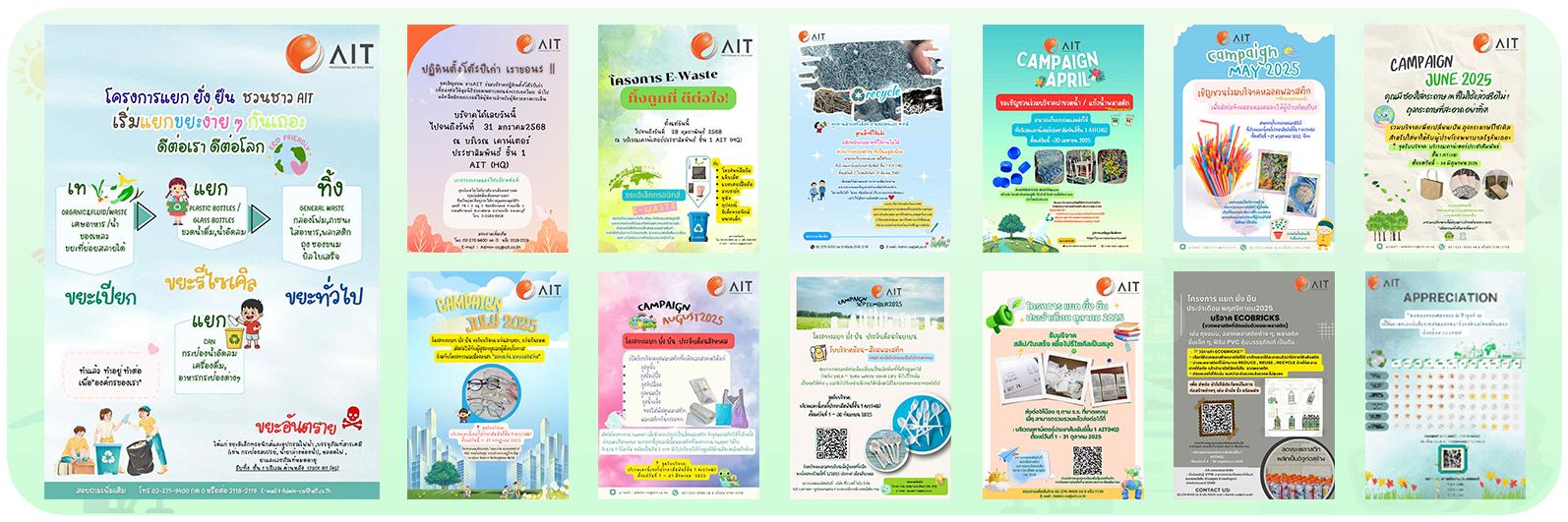
In 2025, the Company continued the “Yak-Yangyuen” (Sustainable Separation) project for the second consecutive year. This initiative promotes employee participation in waste segregation and the redistribution of unused items for social benefit. The Company accepts donations of reusable items and forwards them to social organizations and public benefit entities. The project is implemented as a year-round campaign, with different donation themes each month to encourage continuous engagement and variety. For example, January focuses on collecting old calendars, March on used plastic cups, and May on plastic straws. This approach helps reduce waste, increases opportunities for resource reuse, and creates shared value for society.
In addition, the Company organizes a waste segregation competition among departments and business units. A monthly score is used to evaluate the accuracy and effectiveness of waste segregation practices. The department with the best overall performance throughout the year is awarded an honorary plaque, symbolizing pride and serving as a role model in fostering a sustainable environmental culture within the organization.
Waste Generation, Disposal & Recycling
| Metric | Current Year |
|---|---|
| Total waste generated (Kilograms) | 9,800 |
| Non-hazardous waste (Kilograms) | 9,800 |
| Non-hazardous waste - Landfilling (Kilograms) | 9,800 |
| Non-hazardous waste - Incineration (with energy recovery) (Kilograms) | |
| Non-hazardous waste - Incineration (without energy recovery) (Kilograms) | |
| Non-hazardous waste - Other disposal operations (Kilograms) | |
| Hazardous waste (Kilograms) | |
| Hazardous waste - Landfilling (Kilograms) | |
| Hazardous waste - Incineration (with energy recovery) (Kilograms) | |
| Hazardous waste - Incineration (without energy recovery) (Kilograms) | |
| Hazardous waste - Other disposal operations (Kilograms) | |
| Total reused/recycled waste (Kilograms) | 6,505.7 |
| Reused/Recycled non-hazardous waste (Kilograms) | 6,505.7 |
| Reused non-hazardous waste (Kilograms) | |
| Recycled non-hazardous waste (Kilograms) | 6,505.7 |
| Reused/Recycled hazardous waste (Kilograms) | |
| Reused hazardous waste (Kilograms) | |
| Recycled hazardous waste (Kilograms) |
Waste — Targets
Has Set Targets
No
Waste — Performance & Outcomes
Has Performance Results
Yes
Performance Description
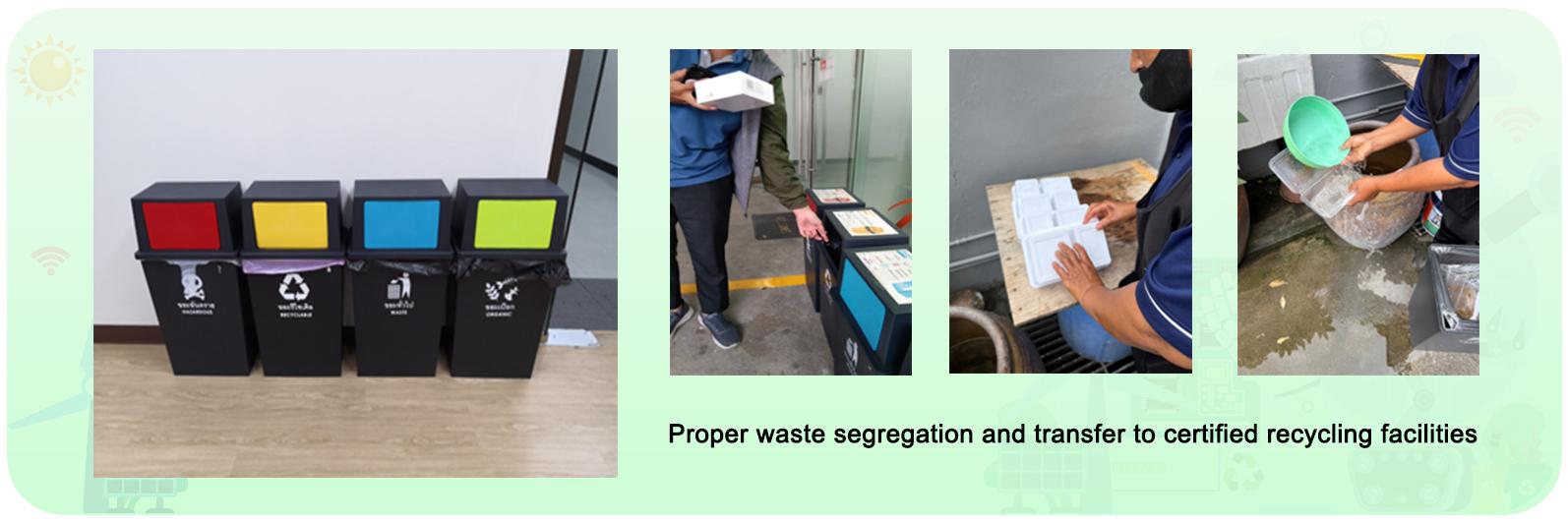
In 2025, the Company implemented tangible waste and waste management initiatives, including the segregation of recyclable waste from the headquarters and its proper transfer to certified recycling facilities in accordance with environmental standards.
The results of these initiatives were assessed to have reduced greenhouse gas emissions by 3,358 kilograms of carbon dioxide equivalent (kgCO2e) during the certification period (1 February 2025 – 16 May 2025). The project has been verified and certified under the Low Emission Support Scheme (LESS).
Greenhouse Gas — Overview
Introduction
The Company recognizes the importance of greenhouse gas (GHG) management in addressing the impacts of climate change. Although the nature of the Company’s operations is not considered a high GHG-emitting industry, certain operational activities such as electricity consumption, air-conditioning systems, and waste management remain sources of emissions that the Company prioritizes for effective management. In addition, the Company has established policies to support investments in sustainable development. This includes investing in reforestation initiatives to mitigate environmental impacts and reduce greenhouse gas emissions over the long term.
In 2025, the Company has adopted standardized practices for greenhouse gas management. It participated in the Low Emission Support Scheme organized by the Thailand Greenhouse Gas Management Organization (Public Organization) and implemented ISO 14064-1 standards, along with digital platforms, to enhance and standardize its activity data and greenhouse gas emission sources in line with international standards. In this regard, Carbon Lead Co., Ltd., a subsidiary with specialized expertise, has been engaged to provide support and technical assistance in the implementation process.
GHG — Plan & Guidelines
Introduction
In 2025, the Company expanded its greenhouse gas (GHG) management plan by adopting recognized standards and implementing key initiatives as follows:
1. GHG Inventory and Reporting: The Company prepared and reported its organizational greenhouse gas emissions in accordance with ISO 14064-1 and the guidelines of the Thailand Greenhouse Gas Management Organization (TGO). A digital platform was utilized to manage data systems, monitor performance, and prepare standardized reports.
2. Participation in the LESS Program: The Company participated in the Low Emission Support Scheme (LESS) of the Thailand Greenhouse Gas Management Organization (Public Organization) and applied its calculation methodologies to monitor and evaluate emission reductions from project activities.
3. The Sak Forest for Carbon Credits Project: The Company implemented a teak plantation project in Khon Buri District, Nakhon Ratchasima Province, covering the full potential area of 940 rai. The project has been registered as a carbon credit project under the Thailand Voluntary Emission Reduction (T-VER) standard of the Thailand Greenhouse Gas Management Organization (Public Organization).
Has a GHG Management Plan
Yes
Plan Description
1. GHG Inventory and Reporting: The Company has enhanced its greenhouse gas (GHG) inventory preparation by utilizing operational data from 2025, which represents the most comprehensive year of emissions data collection compared to previous years. The inventory covers Scope 1, Scope 2, and Scope 3 emissions in accordance with ISO 14064-1 and the guidelines of the Thailand Greenhouse Gas Management Organization (Public Organization). The Company has begun preparing a full greenhouse gas emissions and removals report in accordance with applicable standards for the headquarters and plans to expand this practice to the Company’s service centers in the future.
2. GHG Reduction Initiatives: The Company leverages its data management systems to identify emission reduction potential and implement mitigation measures across various operational areas. It plans to further apply standardized calculation methodologies, including those under the Low Emission Support Scheme (LESS), to systematically collect data and accurately evaluate project-based emission reductions.
3. Monitoring of the Sak Forest for Carbon Credit Project: The Company will continue to maintain and enhance the condition of the reforested areas to ensure optimal tree growth in line with project targets. Ongoing monitoring and evaluation will be conducted to quantify greenhouse gas removals and carbon sequestration, generating carbon credits in accordance with the registered methodologies.
GHG — Emissions
Introduction
An assessment of the Company’s greenhouse gas (GHG) emissions during the period 2023–2025 indicates that total emissions increased by 41.9%. This increase was primarily attributable to improved data completeness across multiple categories. In 2023, the Company collected only partial data, while key emission sources under Scope 1 and Scope 2 such as refrigerants, paper consumption, water usage, and waste, were not yet fully captured or calculated. As a result, the reported emissions for that year were lower than the actual levels. In 2024, the Company expanded the scope of data collection across several categories, leading to a significant increase in reported total emissions.
However, between 2024 and 2025, total GHG emissions increased only slightly by 2.5%. Despite achieving the most comprehensive data coverage in 2025 including all refrigerant types and waste data, this marginal increase reflects the relative stability of the Company’s actual emission levels. The minimal change indicates both improved data quality and a steady level of operational activity compared to the previous year.
GHG Emissions
| Metric | Current Year | Previous Year | Two Years Ago |
|---|---|---|---|
| Total GHG emissions (Metric tonnes of carbon dioxide equivalent) | 1,139.98 | 1,111.93 | 803.35 |
| Total greenhouse gas emissions 1 (Metric tonnes of carbon dioxide equivalent) | 46.3 | 35.65 | 19.84 |
| Total greenhouse gas emissions 2 (Metric tonnes of carbon dioxide equivalent) | 378.99 | 347.24 | 325.15 |
| Total greenhouse gas emissions 3 (Metric tonnes of carbon dioxide equivalent) | 714.69 | 729.04 | 458.36 |
GHG — Emissions Verification
Emissions Verified by a Third Party
No
GHG — Principles & Standards
Principles & Standards Applied
| Standard |
|---|
| 2671 |
| 2672 |
| 2677 |
GHG — Targets
Has Set GHG Targets
No
GHG — Performance & Outcomes
Has Performance Results
Yes
Performance Description
The Company has prepared its organizational greenhouse gas (GHG) inventory in accordance with ISO 14064-1, covering Scope 1, 2, and 3 emissions. The inventory is primarily based on 2025 data and has been fully implemented at the headquarters, with expansion to the Company’s service centers. This initiative supports the establishment of organization-wide greenhouse gas reduction targets in the next phase.
In 2025, the Company submitted its environmental performance data for evaluation under the Low Emission Support Scheme administered by the Thailand Greenhouse Gas Management Organization (Public Organization), Ministry of Natural Resources and Environment. The key outcomes are summarized as follows:
1. Low Emission Support Scheme (LESS): The Company was assessed that its rooftop solar power generation (Solar Rooftop) and waste segregation for recycling activities resulted in a total reduction of 26.849 tonnes of carbon dioxide equivalent (tCO2eq) during the period 15 October 2023 – 16 May 2025.
2. The Sak Forest for carbon credit project (Teak Sustainable Forestation Project): It has been registered under Thailand’s Voluntary Emission Reduction Program (Standard T-VER). The project is expected to reduce or sequester 1,214 tonnes of carbon dioxide equivalent (tCO2eq) per year over the crediting period from 16 June 2024 to 15 June 2034.
These initiatives reflect the Company’s commitment to systematic greenhouse gas management and support its long-term sustainable development objectives.
Environmental Legal Incidents
Legal Violation Incidents
| Metric | Current Year | Previous Year | Two Years Ago |
|---|---|---|---|
| Number of cases or incidents of legal violations or negative environmental impact (cases) | 0 | 0 | 0 |
Employees — Plan & Guidelines
Has an Employee Management Plan
Yes
Plan Description
Fair Compensation for Employees
The company provides various welfare and benefits such as: Welfare and benefits offered by the Company include provident fund, health insurance, life and accident insurance, medical coverage for 40 critical illnesses, and allowances including loans, medical care expenses for family members, funeral allowance, etc. In addition, an Employee Welfare Committee has been established. The employee representatives can participate in conversations with the employer regarding employee welfare and benefits, offering their thoughts or recommendations on the subject. The details are as follows:
Provident Fund | The Company provides a voluntary provident fund for all employees. After completing the probationary period, they can apply to become members of the provident fund. |
Life insurance and medical coverage for 40 critical illnesses | The Company provides coverage for life, accidents and total permanent disability due to illness and also provides coverage for medical coverage for 40 critical illnesses for all employees in a form of self-insurance, categorized by insurance plan. |
Health insurance | The Company provides health coverage for the employees. All employees can use the Company-issued health insurance card to receive treatment at a hospital around-the-clock if they become ill. |
medical care expenses for family members | The Company provides medical care benefit the employees’ parents, spouses and children. |
Funeral allowance | The Company provides funeral allowance for hosting a night of funeral’s event of the employee’s parents, spouse, and children. |
Annual health check-up | The Company provides annual health check-ups for all employees to promote good health and prevent long-term illnesses. |
Loan | The Company has prepared a credit line for employees who have financial needs. This credit line is divided emergency loan and welfare loan with low interest rate. The Company has signed a Memorandum of Understanding (MOU) with a bank to provide loans to employees at special interest rates. |
Employee Training and Development
The Company continuously encourage and develop the HRD policy of employees at all levels in order to achieve the business’s needs as the Company always realized the important of human resources as valuable and key factors leading the Company to achieve the business’ goal. Therefore, the Company aspires to develop employees in all careers at all levels by harmonizing all aspects of development tools for improving their skill, knowledge, and capability through corporate culture and value and also code of conduct in accordance with the Company strategy and business direction.
Career Path: The Company establishes a career path policy for all professions at all levels in order to continuously develop their skill, knowledge and competence by taking into account their talents, attitudes and potentials for further development, maximum efficiency and effectiveness.
Employee Training: The Company plans diversify its resource developments. The most important part that the Company relying on is Staff, The Company believes that the directions of sustainable “Human Assets” management are the foundation to the utmost importance in achieving long term success in the same objectives. Therefore, the main objectives of the training are as follows:
1. Added skills, which able to work with higher skills on both solve the problem and creativity including business expertise.
2. Create positive attitudes at work, this training is able to enhance the employees the knowledge and expertise and fulfill employees needs and expectations including provides career path for the future in order to encourage employees for efficiency work for the Company.
Promoting employee relations and participation
The Company has established policies to foster relationships and engagement at all levels of the organization between executives and employees. These policies aim to promote an open, transparent, and trust-based working environment, while encouraging two-way communication and employee participation in organizational development.
The Company promotes teamwork by cultivating core values and an organizational culture that supports collaboration, respect for diversity, and effective cross-functional coordination, enabling the organization to achieve shared goals sustainably.
In addition, the Company places importance on creating a work environment that supports learning, knowledge sharing, and continuous employee development. This approach strengthens employee engagement, reduces turnover, and supports the Company’s long-term growth.
Migrant/foreign labor and Child labor
The Company places great importance on fair and transparent human resource and labor management in compliance with applicable labor laws. It is committed to creating a work environment that supports employee capability development while promoting quality of life, workplace safety, and organizational engagement.
The Company employs and manages its workforce without discrimination, respecting human dignity and promoting equal opportunities in all aspects, regardless of gender, age, race, religion, ethnicity, skin color, or any other status. This commitment extends to persons with disabilities and other disadvantaged groups. The Company strictly prohibits child labor and opposes sexual harassment. Clear human resource policies and practices are in place, covering recruitment, development, performance evaluation, compensation and benefits, as well as occupational health and safety management.
Safety and occupational health at work
The Company places great importance on the safety of employees’ lives and property by providing a safe and hygienic working environment. This includes workplace environmental monitoring conducted by certified agencies and landscape management, such as tree trimming around office buildings, to enhance safety. The Company also provides appropriate personal protective equipment (PPE) and implements measures to control and reduce risks of accidents and work-related health issues that may arise during operations. In addition, regular training and emergency drills are conducted to ensure preparedness for potential emergencies and disasters.
Plan Areas
| Plan Area |
|---|
| Fair employee compensation |
| Employee training and development |
| Promoting employee relations and participation |
| Migrant/foreign labor |
| Child labor |
| Occupational health and safety in workplace |
Employees — Workforce
Workforce Data
| Metric | Current Year | Previous Year | Two Years Ago |
|---|---|---|---|
| Total number of employees (Persons) | 668 | 656 | 620 |
| Number of male employees (Persons) | 480 | 463 | 439 |
| Number of female employees (Persons) | 188 | 193 | 181 |
| Total employment of disabled persons (people) | |||
| Total disabled employees (people) | |||
| Total male disabled employees (people) | |||
| Total female disabled employees (people) | |||
| Total disabled workers who are non-employee (people) | |||
| Contributions to the fund for promoting and improving the quality of life for disabled persons | 1 | ||
| Total number of male employees in operational level (Persons) | |||
| Total number of male employees in management level (Persons) | |||
| Total number of male employees in executive level (Persons) | |||
| Total number of female employees in operational level (Persons) | |||
| Total number of female employees in management level (Persons) | |||
| Total number of female employees in executive level (Persons) |
Employees — Remuneration & Provident Fund
Remuneration & Provident Fund
| Metric | Current Year | Previous Year | Two Years Ago |
|---|---|---|---|
| Total disabled employees (people) | 817.6 | 850.75 | 738.37 |
| Total male employee remuneration (Baht) | |||
| Total female employee remuneration (Baht) | |||
| Number of employees eligible to participate in PVD (persons) | 387 | 377 | 367 |
| Total number of employees joining employee provident fund (Persons) | 343 | 327 | 327 |
| Percentage of total number of employees joining employee provident fund to total number of employees (%) | 51.35 | 49.85 | 52.74 |
| Number of PVD members / Total eligible employees (%) | 88.63 | 86.74 | 89.1 |
| Total amount of provident fund contributed by the Company (Baht) | 36 | 35 | 33 |
| Total amount of provident fund contributed by employee (baht) | 32.2 | 31.9 | 30.28 |
Employees — Training & Development
Training Data
| Metric | Current Year | Previous Year | Two Years Ago |
|---|---|---|---|
| Average employee training hours (Hours / Person / Year) | 9.49 | 22 | 8.05 |
| Employee development and training expenses (baht) | 12,200,000 | 17,300,000 | 20,900,000 |
Employees — Occupational Health & Safety
Occupational Health & Safety Data
| Metric | Current Year | Previous Year | Two Years Ago |
|---|---|---|---|
| Total number of lost time injury incidents by employees (Cases) | 0 | 2 | 0 |
Employees — Labour Relations
Labour Relations Data
| Metric | Current Year | Previous Year | Two Years Ago | Remark |
|---|---|---|---|---|
| Total voluntary resignations (Persons) | 36 | 100 | 67 | |
| Male employees who voluntary resigned (Persons) | ||||
| Female employees who voluntary resigned (Persons) | ||||
| Percentage of employee turnover leaving the Company voluntarily (%) | 5.39 | 15.24 | 10.81 | |
| Evaluation result of employee engagement | 1 | In 2025, the Company conducted an employee engagement survey in collaboration with experienced academic advisors specializing in Human Resource Organization Development (HROD). The results showed an engagement score of 64%, indicating that there remains room for further improvement in strengthening organizational engagement. Based on the survey findings, the HR has prioritized development in three key areas: work processes, career development, and compensation and benefits. |
Employees — Employee Representation
Introduction
The Company has established a Welfare Committee in the Workplace and an Employer Welfare Committee to oversee and enhance employee welfare to ensure appropriateness, fairness, and alignment with employees’ needs. These committees operate in compliance with Section 96 of the Labour Protection Act B.E. 2541 (1998) and other relevant laws. The committees comprise representatives from management and employees and are responsible for systematically reviewing, recommending, and monitoring welfare initiatives.
This mechanism enables employees to participate in providing feedback and suggestions, promoting transparency, fairness, and positive workplace relationships. It contributes to improved quality of work life and supports the Company’s sustainable growth.
Employees Are Represented Collectively
Yes
Forms of Representation
| Form |
|---|
| Welfare committee |
Employees — Targets
Has Set Employee Targets
No
Employees — Performance & Outcomes
Has Performance Results
No
Performance Description
Fair employee compensation
The Company has established a standardized salary structure for employees with the support of Mercer (Thailand) Co., Ltd., a leading human resources consulting firm. In 2025, the Human Resources Section (HR) reviewed the salary structure against market benchmarks to ensure competitiveness. The Company also reviewed and enhanced employee benefits, including the addition of provident fund managers to provide employees with more investment options. Currently, the Company offers two registered provident fund options. In addition, the Company is in the process of selecting a health insurance provider that offers more convenient reimbursement and claims services, such as mobile applications that allow employees to check their benefits and submit claims quickly and efficiently.
Furthermore, the Company has expanded welfare benefits for contract employees, enabling them to access key benefits such as family medical expense coverage and funeral assistance. These benefits are provided within specified limits in accordance with the Company’s policies to promote equitable access to employee welfare.
In 2025, a total of 343 employees participated in the provident fund, representing 88.63% of all permanent employees. This reflects employees’ awareness of long-term financial planning and their confidence in the Company’s welfare system.
Employee Training and Development
At present, the Company’s career path framework is divided into two tracks: the Managerial Track and the Professional Track. In 2025, the Company’s Career Development plan was formulated in collaboration with heads of departments. The development and training plan consists of two main components:
1. Functional Training and Development
This development approach focuses on enhancing employees’ skills in alignment with their job responsibilities, enabling them to respond effectively to rapid technological changes and current business needs. Development programs include both upskilling and reskilling through online and offline formats. For the Professional Track, the Company emphasizes strengthening technical competencies in technologies currently in use and emerging in the market, such as Engineering, Cybersecurity, Data, and Artificial Intelligence (AI). Employees are also encouraged to assess their knowledge and capabilities through professional certification programs across various technologies, supporting knowledge advancement and clear career progression. For the Managerial Track, development focuses on coaching capabilities and essential soft skills to enable leaders to manage teams professionally and effectively.
2. Training Aligned with Corporate Culture
The Company provides training programs that enhance interpersonal and people management skills, including working with supervisors, subordinates, colleagues, and customers. These programs support alignment with the Company’s core values. In 2025, the Company invited expert speakers to deliver the following programs:
1). Developing Growth Mindset: This program builds understanding of the meaning and benefits of a growth mindset, encouraging employees to apply it in daily work. It promotes creativity, confidence in one’s potential, and continuous self-development. Organizations with a strong growth mindset culture are better positioned to achieve sustainable success.
2). Empathetic Mindset (Inward & Outward Mindset): This program broadens perspectives by encouraging individuals to consider the needs and impacts of their actions on others. It helps leaders better understand employees’ contributions and reduces barriers to collaboration. Organizations that clearly define desired mindsets are significantly more successful in driving change.
3). Performance Management KPIs with CFR (for VP level and above): This program uses simulated scenarios to enhance understanding of performance management systems. Participants learn goal-setting, success metrics, and CFR (Conversations, Feedback, Recognition) techniques to drive performance and support effective annual evaluations.
4). Performance Management Cascading KPIs (for employees): This program builds understanding of performance management through goal setting, action planning, and KPI development. Participants practice setting measurable goals and receive feedback to improve annual performance evaluations.
5). Business Game – MonSoonSIM Workshop: This program develops essential competencies for today’s complex business environment through simulation-based learning. It emphasizes teamwork, communication, strategic planning, data-driven decision-making using ERP systems, business process understanding, and corporate entrepreneurship (intrapreneurship).
6). Resilience & Adaptability at Work: This program equips employees with techniques to manage stress, prevent burnout, and adapt to changing environments. It helps employees maintain well-being, work happiness, and sustained productivity.
7). The High Performing Leader Program: This program is designed for employees striving for excellence and leadership effectiveness. It strengthens management capabilities in leading teams to achieve organizational vision, mission, and strategic goals.
8). Safety Officer Training (Supervisor Level): This program enhances supervisors’ knowledge and skills in workplace safety, ensuring compliance with legal requirements, reducing risks and accidents, improving operational efficiency, and minimizing losses in assets, time, and costs — supporting sustainable business operations
Promoting employee relations and participation
In 2025, the Company implemented initiatives to strengthen its Core Values in alignment with its vision, mission, and future business objectives. The Company also conducted an employee engagement survey to assess organizational engagement, which serves as a foundation for building a strong organization and supporting sustainable development.
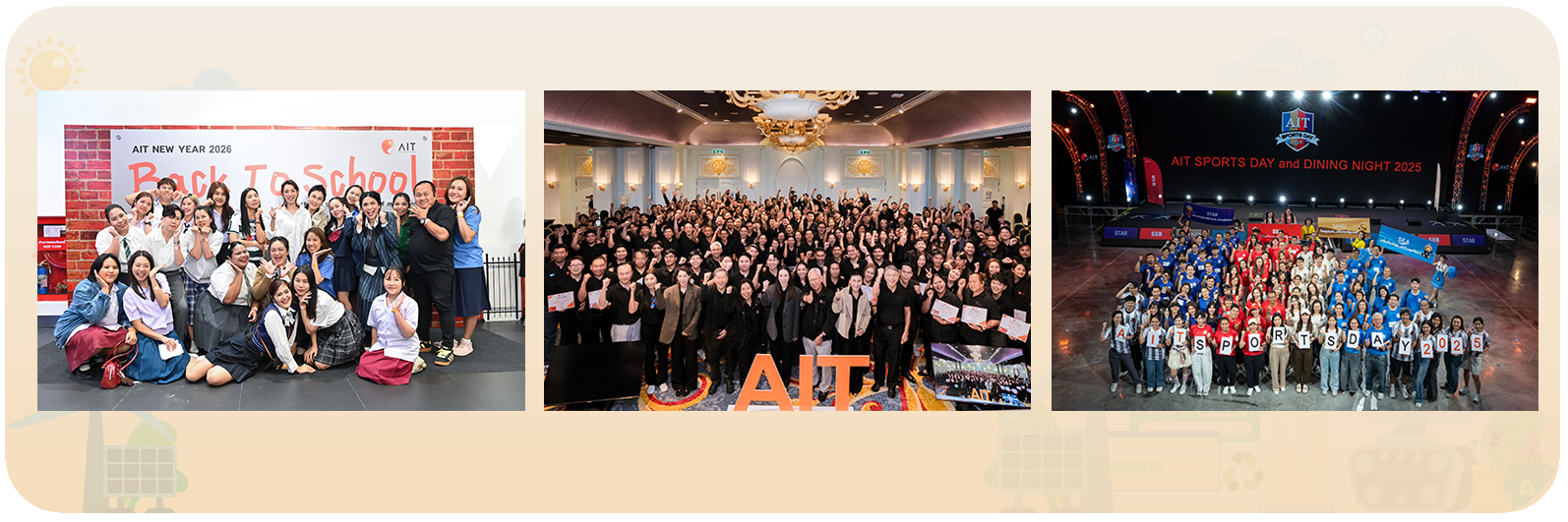
In addition, the Company places importance on team building to enhance collaboration and employee relationships. During the past year, various activities were organized, including internal sports events (AIT Sports Day) and New Year Party.
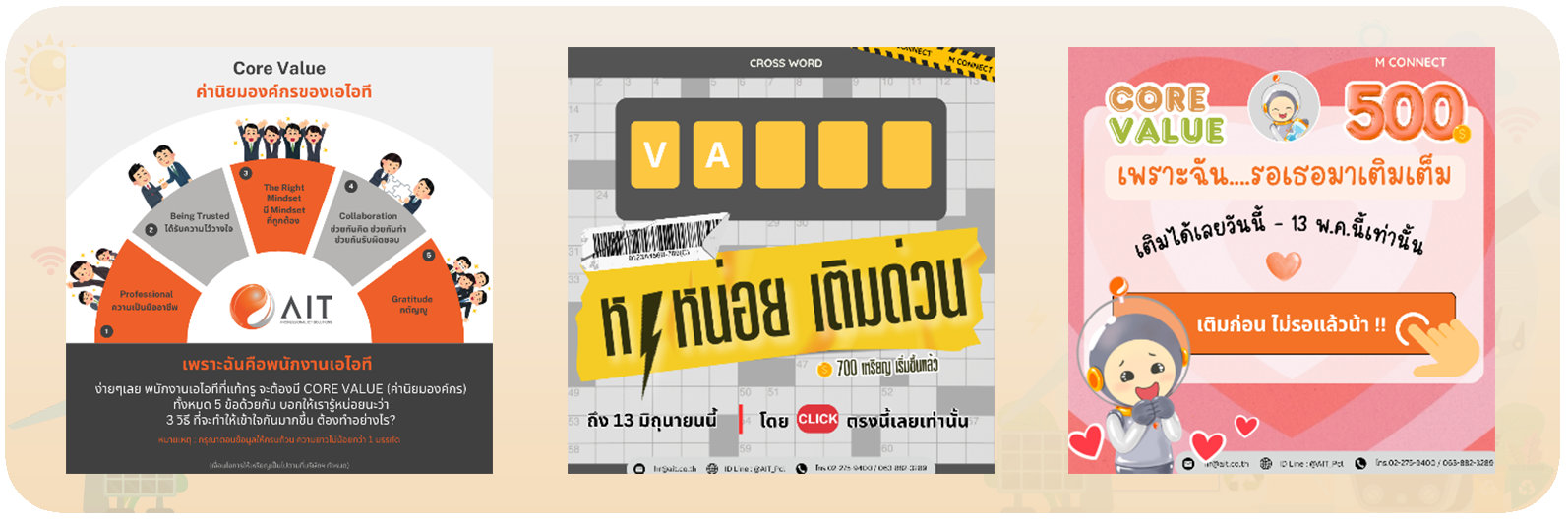
Throughout the year, the HR carried out initiatives to strengthen organizational engagement by fostering relationships and improving internal communication. Activities were conducted through the LINE application under the platform “M-Connect,” with each activity designed to raise awareness and provide knowledge about the Company’s Core Values, which consist of five key elements:
1. Professional – Demonstrating skills, knowledge, and expertise in both depth and breadth.
2. Being Trusted – Earning trust and being reliable.
3. Growth and Outward Mindset
Growth Mindset: Believing that abilities can be developed through effort, learning, and adaptation.
Outward Mindset: Considering the needs of others rather than focusing solely on personal interests.
4. Collaboration – Working together to achieve shared goals.
5. Gratitude – Appreciating positive experiences at work and valuing trust among team members.
Examples of activities conducted via M-Connect include quizzes on core values, fill-in-the-blank exercises, and interactive questions designed to help employees better understand and internalize each core value. These activities reinforce employees’ awareness and retention of the Company’s Core Values.
Migrant/foreign labor, Child labor
The Company places great importance on fair, transparent, and lawful human resource and labor management in compliance with applicable labor laws. It is committed to creating a work environment that supports employee potential development, while promoting quality of life, workplace safety, and organizational engagement.
The Company conducts employment and employee care without discrimination, respecting human dignity and promoting equal opportunities in all aspects, regardless of gender, age, race, ability, or other status. Clear human resource policies and practices are in place, covering recruitment, development, performance evaluation, compensation and benefits, as well as occupational health and safety.
In 2025, the Company did not employ persons with disabilities. However, the Company strictly complied with relevant laws by contributing to the Fund for the Promotion and Development of the Quality of Life of Persons with Disabilities in accordance with the criteria and rates prescribed by the Ministry of Labour.
For 2025, the Company’s employment plan includes the following:
1. Workforce Planning: The Company considers workforce adjustments each year in line with its business goals and expansion plans to ensure an optimal number of employees to meet both short-term and long-term business needs. The Human Resources (HR) Department proactively operates under the HR Business Partner model to support and provide insights to various departments. This includes recruitment, hiring for new or replacement positions, internal transfers to support career growth, workforce management, and employee development.
2. Recruitment and Selection: The HR Department has established recruitment and selection plans in accordance with the defined workforce framework.
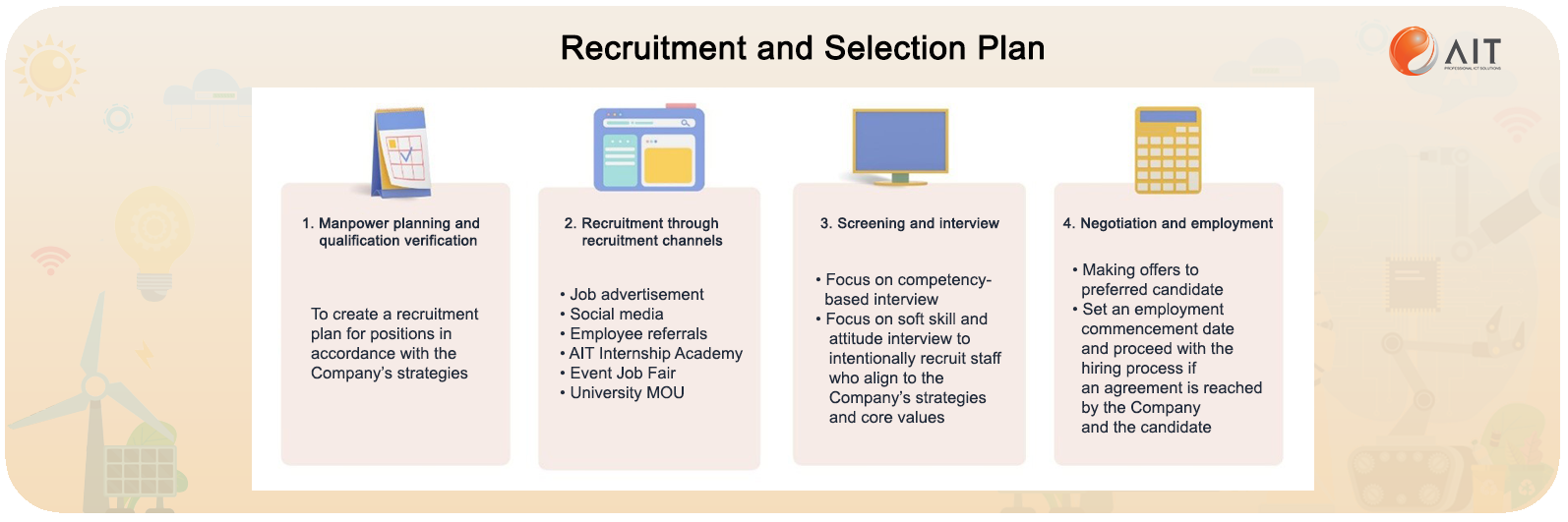
In 2025, the Company implemented a policy to promote internal recruitment by considering employee transfers when vacancies arise. This approach provides employees with opportunities to expand their capabilities, develop new skills, and advance their careers. The initiative aligns with the Company’s efforts to strengthen workforce capabilities to support business expansion and to enhance long-term employee engagement.
In addition, the Company carried out three key internship initiatives aimed at developing skills aligned with the needs of the Information and Communication Technology (ICT) industry, while providing students with hands-on experience under the supervision of experienced professionals:
1. AIT Internship Academy: The Company places importance on developing future talent by providing internship opportunities that offer real-world experience. The program aims to equip students with practical skills and prepare them for future careers in the ICT industry.
2. Basic Network Training for AIT Internship Academy Students: The Company provides Basic Network training to internship students to enhance their foundational technical knowledge and ensure readiness before commencing practical work assignments.
3. Participation in Job Fair Events: In 2025, the Company proactively participated in job fair events at three universities:
• Faculty of Engineering, Prince of Songkla University
• Chulalongkorn University
• Faculty of Engineering, Chiang Mai University
These initiatives support talent pipeline development and strengthen the Company’s employer brand among future ICT professionals.
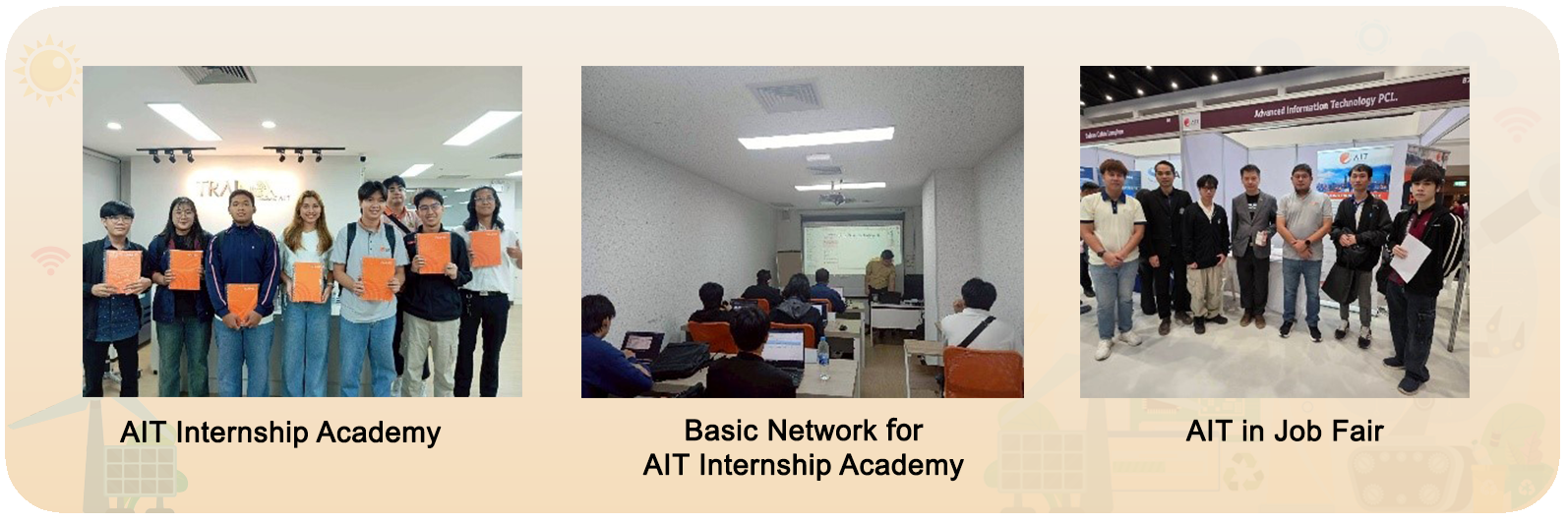
The Company continues to place strong emphasis on the development of human capital by promoting internship programs that provide learning opportunities and help prepare the next generation of professionals for the labor market. These initiatives support students in developing professional skills and gaining practical experience, while also allowing the Company to become acquainted with and assess the potential of young talents for future recruitment.
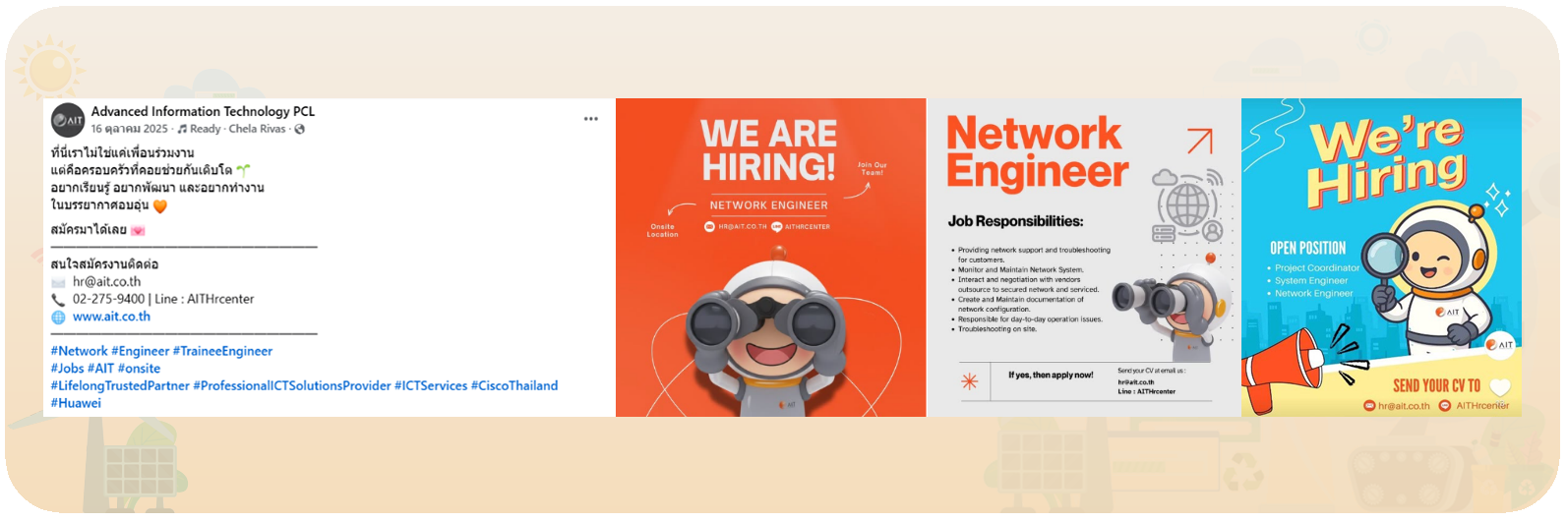
In addition, during this year the Company expanded its recruitment communication channels through social media platforms, including Facebook, TikTok, and Instagram, by publishing job announcements and related content. This initiative enables the Company to reach a wider and more diverse target audience and serves as an important channel for talent acquisition that aligns with the media consumption behavior of the younger generation.
In 2025, the Company did not employ persons with disabilities. However, the Company strictly complied with relevant legal requirements by contributing to the Fund for the Empowerment of Persons with Disabilities in accordance with the criteria and rates prescribed by the Ministry of Labour.
Safety and occupational health at work
In 2025, the Company established its Occupational Health, Safety and Working Environment Policy to demonstrate its commitment to systematically managing safety risks that may arise from business operations. The Policy places emphasis on compliance with all applicable laws and requirements, both internal and external, alongside the provision of a safe and suitable working environment, so that all employees and relevant stakeholders enjoy a good quality of life, free from occupational hazards or risks — a fundamental pillar of efficient and sustainable business operations.
In addition, the Company has established an Occupational Safety, Health, and Work Environment Committee to drive the implementation of the aforementioned policies. The Committee provides opportunities for representatives from all departments to propose safety improvement measures, report risk issues, and develop preventive guidelines to mitigate risks arising from the Company’s operations. Key measures that have been continuously implemented include improving and reducing risks in operational areas, monitoring and enhancing workplace environments to ensure compliance with legal requirements, installing Automated External Defibrillators (AEDs) at the headquarters and branch offices, and conducting fire safety training and emergency evacuation drills.
Furthermore, the Company promotes a safety culture within the organization through safety training programs for employees at all levels, including newly hired staff, alongside the development of a Safety Manual that clearly sets out practical guidelines and hazard prevention procedures. These efforts are aimed at preventing accidents, reducing occupational risks, and fostering a sustainably safe working environment.
Customers — Plan & Guidelines
Has a Customer Management Plan
Yes
Plan Description
Responsible production and services for customers
The Company places great importance on the quality of products and services delivered to customers. Building strong relationships with partners and business allies enhances mutual understanding of product formats and service delivery approaches. The Company has achieved long-standing success and maintained a strong reputation in Thailand’s Information and Communication Technology (ICT) industry, earning recognition from both public and private sectors. The Company has participated in various projects in diverse roles, depending on project requirements, including serving as a Prime Contractor, Subcontractor, or as part of a Consortium. This flexibility enables the Company to deliver appropriate solutions and ensure high standards of service quality and customer satisfaction.
Communication of product and service impacts to customers
As a system integrator, the Company adopts a comprehensive customer management approach, placing strong emphasis on transparent, complete, and easy-to-understand communication regarding its products and services, including potential impacts on customers. This enables customers to make informed decisions while fostering long-term relationships, satisfaction, and trust through various initiatives, as outlined below:
1. Strengthening Customer Relationships: The Company organizes a variety of activities, such as training sessions, seminars, and joint exhibitions with partners, to provide customers with information, knowledge, and updates on emerging technologies.
2. Delivering Tailored Solutions: The Company continuously enhances and refines its solution offerings to meet the specific needs of customers across different industries. Expert teams are available to provide close consultation and professional recommendations.
3. Building Strong Partnerships: The Company collaborates closely with leading business partners to ensure that customers receive appropriate, up-to-date, and highly efficient solutions and technologies.
Development of customer satisfaction and customer relationship
Through these management practices, the Company is committed to becoming a “Lifelong Trusted Partner” to its customers, supporting their success and sustainable growth over the long term. The Company continuously strives to enhance service quality to create positive customer experiences and deliver value in every dimension.
The Company regularly conducts customer satisfaction surveys to gather feedback, insights, and expectations. The results are analyzed and used to improve services in line with evolving customer needs, as well as to enhance service standards, operational processes, and solution development for greater effectiveness.
The Company believes that consistently building customer satisfaction and trust is a key factor in strengthening long-term relationships. This enables the Company to deliver appropriate solutions, effectively meet customer needs, and create shared value sustainably.
Consumer data privacy and protection
The Company has established a Personal Data Protection Policy and issued a Privacy Notice applicable to all departments across the organization, as well as relevant external parties, to ensure awareness of proper practices. A dedicated personal data protection unit and related committees oversee and closely monitor compliance.
The Company has implemented a Privacy Management System as a core platform to support comprehensive compliance with the Personal Data Protection Act B.E. 2562 (2019) (PDPA). A specialized system development team continuously maintains and enhances the platform. The Company regularly reviews personal data processing activities to identify the types of data collected, verify accuracy with responsible personnel, and review policies, procedures, and data disclosure or transfer practices to ensure security and legal compliance. This includes defining purposes, retention periods, and maintaining required documentation in accordance with legal requirements.
The Privacy Management System includes key functionalities such as:
1. Records of Processing Activities (RoPA)
2. Cookie consent and data subject consent management
3. Data subject rights management
4. Personal data breach notification and management
Supplier and Business Partner Relationships
The Company has established a systematic supplier management and selection process based on fairness, transparency, and equal access to information. Supplier evaluations and selections are conducted in strict accordance with the Company’s criteria. The Company also promotes and monitors compliance among executives, employees, and relevant parties with the Business Ethics Handbook, particularly the policy on “Supplier Relations and Practices,” to ensure operations align with good governance and ethical business standards.
The Company places strong emphasis on building and maintaining positive relationships with suppliers and business partners, particularly leading technology partners. These collaborations support the development of high-quality, up-to-date solutions that effectively meet customer needs. Such partnerships enhance service standards, build customer confidence, strengthen the Company’s competitive capabilities, and support sustainable growth across the supply chain and among all stakeholders.
Plan Areas
| Plan Area | Other — Please Specify |
|---|---|
| Responsible production and services for customers | |
| Communication of product and service impacts to customers/consumers | |
| Development of customer satisfaction and customer relationship | |
| Protection of customer personal information | |
| Others | Supplier and Business Partner Relationships |
Customers — Satisfaction Results
Customer Satisfaction Results
| Metric | Current Year | Previous Year | Two Years Ago |
|---|---|---|---|
| Evaluation results of customer satisfaction | 1 | 1 | 1 |
Customers — Targets
Has Set Customer Targets
No
Customers — Performance & Outcomes
Has Performance Results
Yes
Performance Description
Communication of product and service impacts to customers
The Company has conducted a variety of activities, such as training sessions, seminars, and joint exhibitions with business partners, to continuously share information, knowledge, and updates on emerging technologies with customers and relevant stakeholders. These efforts are carried out alongside the provision of comprehensive, clear, and easy-to-understand information about the Company’s products and services, enabling customers to assess the suitability of solutions and make informed decisions effectively.
Such activities also enhance customers’ understanding of product and service features, benefits, limitations, and appropriate usage guidelines, leading to safe, cost-effective, and optimal utilization. Key activities undertaken in 2025 include:
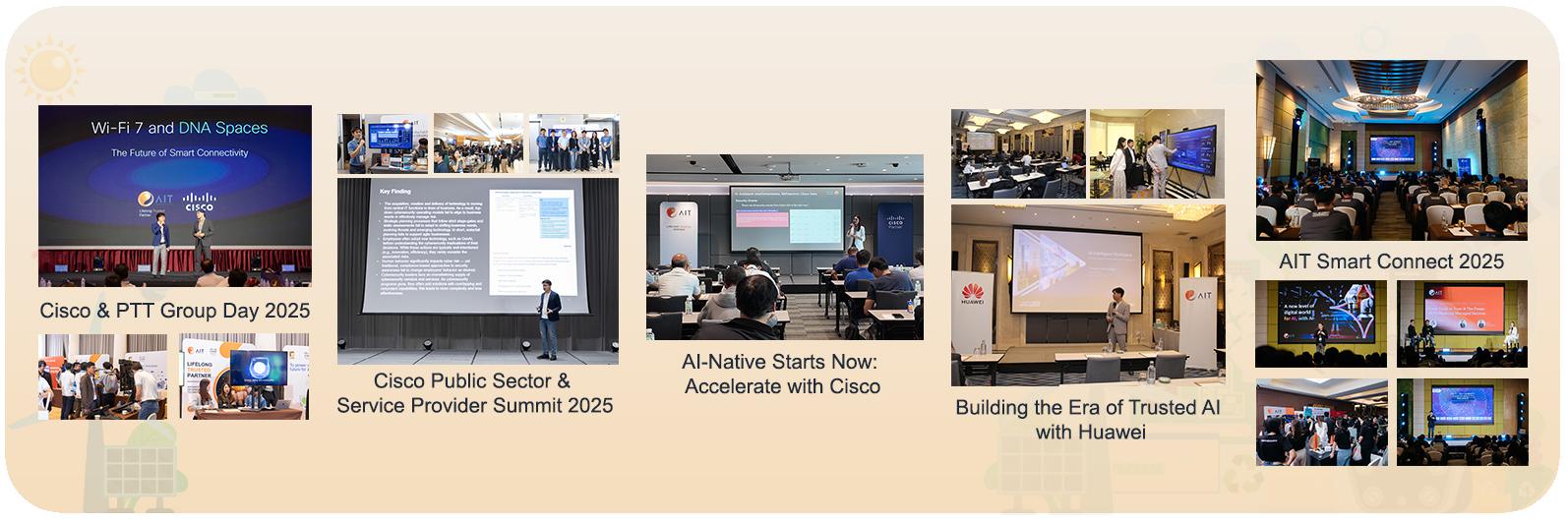
1. Cisco & PTT Group Day 2025: The Company joined as a sponsor at the Cisco Public Sector & Service Provider Summit 2025. The Company presented Cisco XDR (Extended Detection and Response), an advanced cybersecurity solution that enables comprehensive threat detection, analysis, and response across multiple sources, strengthening organizational network security. Mr. Ekarun Tansun (Senior Vice President – Presales) delivered a session titled “Constructing a Resilient Cyber Security Infrastructure & Safeguarding Your Network in the Modern Era,” emphasizing strategies for building resilient cybersecurity infrastructure. The event reaffirmed the Company’s role as a reliable technology partner. The event was held from 28 February to 2 March 2025 at Grande Centre Point Space Pattaya.
2. Cisco Public Sector & Service Provider Summit 2025: The Company joined as a sponsor at the Cisco Public Sector & Service Provider Summit 2025. The Company presented Cisco XDR (Extended Detection and Response), an advanced cybersecurity solution that enables comprehensive threat detection, analysis, and response across multiple sources, strengthening organizational network security. Mr. Ekarun Tansun (Senior Vice President – Presales) delivered a session titled “Constructing a Resilient Cyber Security Infrastructure & Safeguarding Your Network in the Modern Era,” emphasizing strategies for building resilient cybersecurity infrastructure. The event reaffirmed the Company’s role as a reliable technology partner. The event was held from 28 February to 2 March 2025 at Grande Centre Point Space Pattaya.
3. Seminar: “AI-Native Starts Now: Accelerate with Cisco”: The Company, in collaboration with Cisco Systems (Thailand), hosted a seminar presenting concepts and solutions related to AI-ready data centers, cloud, networking, and cybersecurity. The event provided insights into AI-native technology trends and IT infrastructure readiness for AI workloads, enabling organizations to adopt AI securely, efficiently, and flexibly. The seminar also facilitated knowledge sharing and collaboration among participants. The seminar was held on 19 June 2025 at Victor Club, Samyan Mitrtown, Bangkok.
4. Seminar: “Building the Era of Trusted AI with Huawei”: The Company, in collaboration with Huawei Technologies (Thailand), organized a seminar delivering knowledge and updates on Trusted AI and AI workplace solutions to IT engineers, network administrators, executives, and IT professionals. Expert speakers from the Company, Huawei, and STelligence covered AI infrastructure, hybrid cloud, and enterprise AI applications. Networking activities were also arranged to strengthen customer relationships. The seminar was held on 25 September 2025 at Grande Centre Point Terminal 21, Bangkok.
5. AIT Smart Connect 2025: The Company’s annual flagship seminar, AIT Smart Connect 2025, showcased the Company’s capability as a long-term technology partner under the vision “LIFELONG TRUSTED PARTNER” and the theme “EVOLVING TOGETHER, LEADING ALWAYS.” The seminar featured knowledge sharing and technology trends in AI, Hybrid Cloud, and Digital Infrastructure from global partners. Technology showcases from more than 16 leading brands including Cisco, Fortinet, HPE, Palo Alto, Red Hat, VMware, Cloudflare, Cohesity, Gigamon, Group-IB, Infoblox, Radware, SolarWinds, Trellix, Trend Micro, and Veeam—presented comprehensive solutions for modern business needs. The event was held from 14–16 November 2025 at Centara Grand Mirage Beach Resort Pattaya. The event attracted numerous senior executives and representatives from leading organizations nationwide.
Development of customer satisfaction and customer relationship
The Company’s Customer Service Department conducts customer satisfaction surveys to collect feedback and key issues, which are analyzed to improve services and better meet customer needs, creating maximum value. In 2025, the Company achieved the following satisfaction scores:
- On-time service delivery: 99.52%
- Technical expertise and problem resolution capability of service staff: 99.58%
- Overall customer satisfaction: 99.61%
In 2025, the Company further enhanced its Customer Service Management (CSM) system by integrating AI technology to improve service speed and efficiency. The Company continues to develop the CSM platform into a fully automated system to provide end-to-end service management, enabling tracking and monitoring across all service types, including installation, delivery, and maintenance. A key enhancement is the Service Knowledge Management System (SKMS), which serves as a centralized repository for customer service data, enabling efficient search and retrieval. This enables faster, more accurate service delivery aligned with customer needs. The Company has also expanded service request channels through a Web Portal and the Line Official Account @AITHelpDesk to better accommodate evolving customer preferences.
In addition, the Customer Service Department launched the CS–AI Project to systematically integrate artificial intelligence into operational processes by addressing real operational pain points through deep understanding of people and workflows. The Company established the CS AI Champions Team, comprising engineers from across Customer Service functions: including technical and operational roles, to drive AI adoption and continuously share knowledge across the organization. Employees’ capabilities were strengthened through intensive training under the Artificial Intelligence Engineer in Practice program, enabling engineers to design and develop AI solutions while promoting AI literacy throughout the organization.
The project aims to develop AI applications and tools to enhance operational excellence and elevate customer experience through faster, more accurate, and value-added services. Strategically, this initiative enables the Company to develop solutions using internal talent rather than relying on external providers, fostering the accumulation of knowledge capital and building genuine expertise in AI technologies. The initiative reflects the Company’s commitment to empowering employees with the knowledge, skills, and innovative capabilities needed to develop new service models, adapt to technological changes, and create competitive differentiation within the industry.
Supplier and Business Partner Relationships
The Company maintains strong relationships with leading technology suppliers and business partners across various domains to ensure operational efficiency, effectiveness, and enhanced competitiveness. For the Information Technology and infrastructure business, key partners include Cisco, HPE, VMware by Broadcom, Oracle, and Cohesity. In the cloud business, primary partners include Cisco, HPE, and VMware by Broadcom. In the cybersecurity business, key partners include Cisco, Palo Alto Networks, Fortinet, and Trend Micro. In parallel, the Company continuously develops its personnel to strengthen their knowledge and capabilities in delivering services based on partner technologies. Employees obtain professional certifications from major partners, including Cisco, HPE, NetApp, Fortinet, Palo Alto Networks, VMware by Broadcom, Cohesity, Veeam, Radware, Microsoft, and Huawei.
In 2025, the Company received numerous awards and recognitions from leading industry partners, affirming its sales performance and leadership in the Information and Communication Technology sector. These awards include:
- Cisco: FY25 Partner of the Year
- Cisco: FY25 Networking Partner of the Year
- Cisco: FY25 Security Partner of the Year
- Cisco: FY25 Public Sector Partner of the Year
- Cisco: FY25 Service Provider Partner of the Year
- Cisco: FY25 Customer Experience Partner of the Year
- Cisco: 1st Runner Up – One Cisco Partner Perfect Pitch 2025
- Cohesity: FY Preferred Partner
- HPE: Best Reseller of the Year 2025 – Top Performance (Commvault)
- M.Tech: Digital Transformation Partner of the Year Award 2025
- SkyHigh: Reseller of the Year 2025
- Veeam: Value-Added Reseller Platinum Level
The Company also participated as a guest speaker at Huawei Connect 2025, where Mr. Putthi Thamrongsiriwat, Assistant President, delivered a presentation on “Partnering for Growth: Huawei Certification Empowers Partners in Thailand.” In addition, the Company joined the AIT and Huawei GTS High-Level Meeting held from 17–19 September 2025 in Shanghai, People’s Republic of China, to strengthen collaboration in enhancing service quality. The Company was further honored with a commemorative plaque from Huawei, recognizing more than five years of continuous partnership—symbolizing sustainable collaboration and shared growth.
Moreover, in 2025, the Company won the APJC Regional – ASEAN Winner award at the Cisco Partner Innovation Challenge 2025 for its “Nexus AI” project. Developed by the Company’s engineering team, Nexus AI enhances meeting data management within enterprise infrastructure. The solution features native integration with Cisco Webex, enabling automatic synchronization of meeting recordings, multilingual transcript generation, and AI-powered summaries highlighting key points, decisions, and action items. It also provides standardized reports and a dashboard for efficient retrieval of historical meeting data. Nexus AI reduces report preparation time, improves information accessibility, and enhances internal operational efficiency. This achievement reflects the Company’s capability to develop enterprise-grade AI solutions and its international recognition for innovation. It also reinforces the Company’s commitment to developing employee capabilities to drive innovation and create new service models that respond to technological change while delivering added value to customers and the organization over the long term
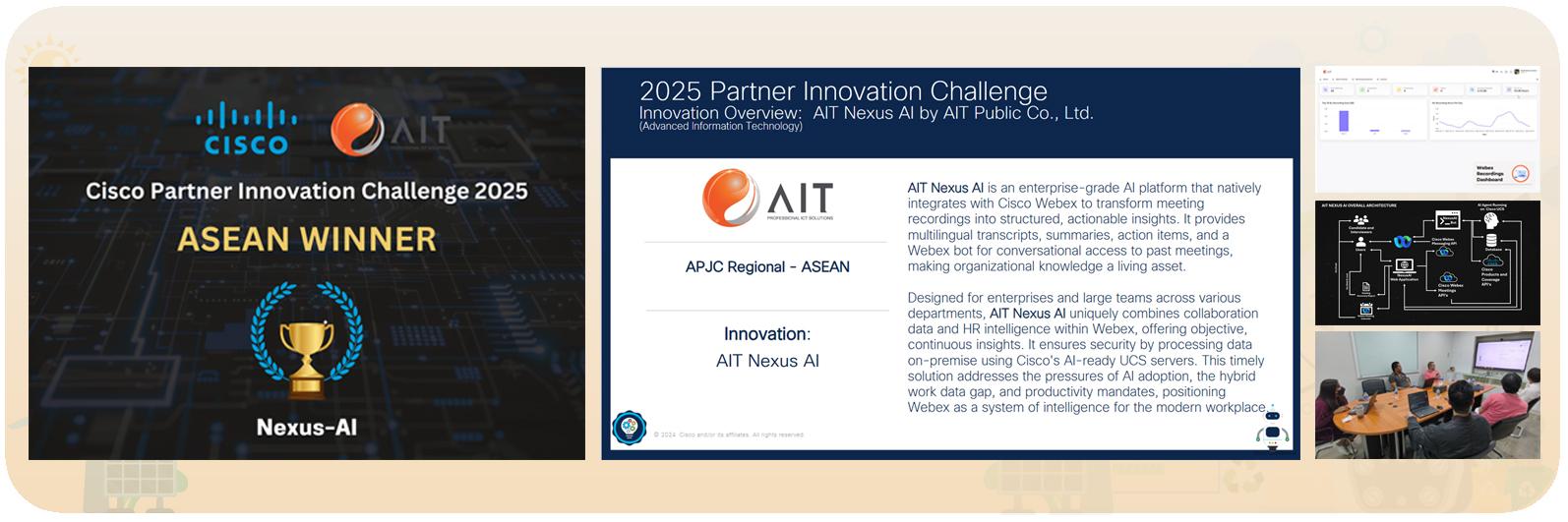
Community & Social — Overview
Introduction
The Company places importance on community and society, particularly in promoting equitable access to education, which is regarded as a fundamental foundation for human capital development and long-term sustainability.
In 2025, the Company established the Guidelines for Social, Environmental, and Sustainability Activities to serve as a framework for planning, selecting, and monitoring the Company’s sustainability initiatives in a systematic manner. These guidelines are aligned with the Company’s corporate strategy and principles of good corporate governance. The guidelines encompass operations across social and environmental dimensions, as well as stakeholder engagement, with an emphasis on creating shared value between the Company, communities, and society. In addition, criteria for monitoring and evaluation were defined to ensure that the activities undertaken generate sustainable outcomes and positive long-term impacts.
During 2025, the Company implemented projects focused on supporting schools in rural and underserved areas through the donation of computers, information technology equipment, and educational materials. These initiatives aim to help reduce educational inequality and enhance teaching and learning capabilities in line with the current digital era.
Community & Social — Plan & Guidelines
Has a Community & Social Plan
Yes
Plan Description
The Company has established its approach to community and social development in accordance with the “Guidelines for Social, Environmental, and Sustainability Activities,” as summarized below.
Select schools with limited access to technology equipment and learning materials as a priority.
Focus on support that enables practical and continuous utilization.
Integrate the Company’s resources to maximize value, including equipment, expertise, and employee engagement.
Monitor utilization and assess outcomes on an ongoing basis.
Plan Areas
| Plan Area |
|---|
| Education |
| Disadvantaged and vulnerable groups |
| Reducing inequality and promoting social equality |
Community & Social — Targets
Introduction
The Company has set a goal to continuously support community and social development in the area of education, with a focus on reducing inequality and enhancing access to educational technology for schools in remote and underserved areas within the defined budget framework, the Company aims to support at least two rural or underserved schools per year through the donation of computers, educational equipment, and improvements to learning environments, with due consideration given to practical utilization and the outcomes for students and teachers.
Has Set Community & Social Targets
Yes
Targets
| Indicator | Target Areas | Target Year | Target Year — Description |
|---|---|---|---|
| 1. Number of schools supported through the provision of computers and educational equipment (target: ≥ 2 schools per year) 2. Satisfaction level of supported schools | 3037 · Description: Education · 3044 · Description: Reducing inequality | 2,025 | Implement the annual plan as established. |
Community & Social — Performance & Outcomes
Has Performance Results
Yes
Performance Description
In 2025, the Company supported more schools than the number originally targeted, reflecting its strong commitment to promoting educational opportunities and continuous social development.
The “AIT Pan-Comp: Empowering Learning for Underserved Schools”, the CSR project of the Company delivered computers and learning equipment to small rural schools with a total number of teachers and students not exceeding 100. During the year, support was provided to three (3) schools:
(1) Prachasongkroh School, Kham Khuean Kaeo District, Yasothon Province;
(2) Ban Nongkrabao School, Sao Hai District, Saraburi Province; and
(3) Ban Tao Poon School (Phichaiyaprachanukul), Song District, Phrae Province.
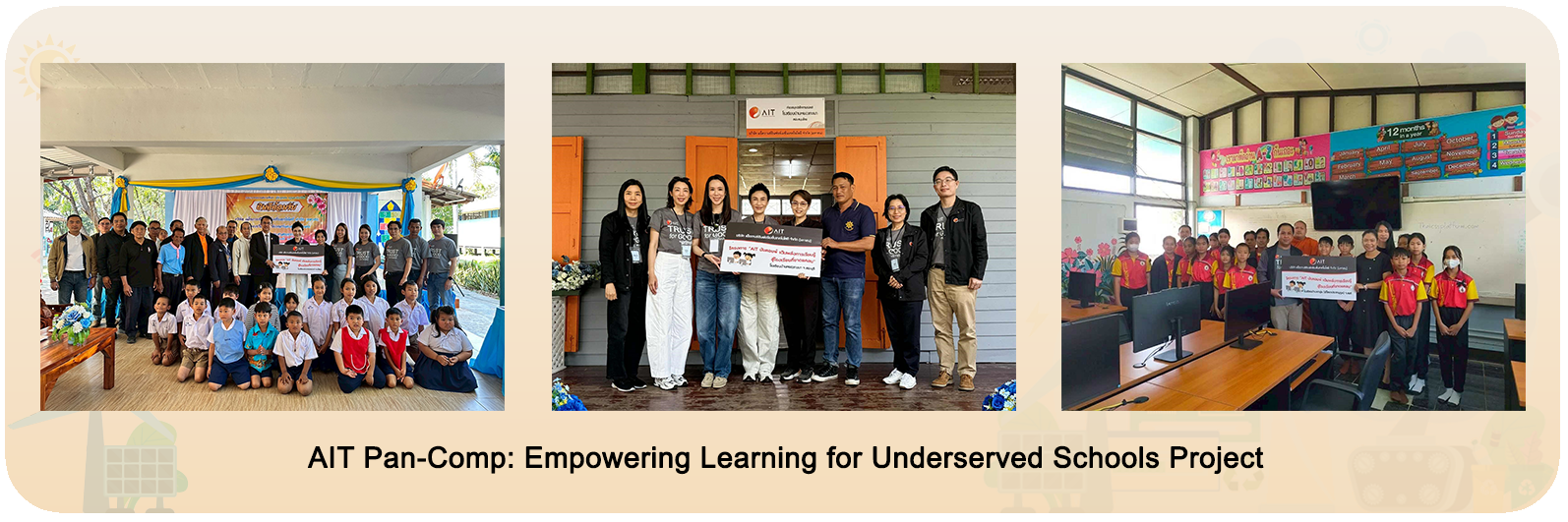
In addition, the Company implemented the AIT Educational Equipment and Learning Environment Enhancement project, which provided educational equipment such as desks, chairs, bookshelves, and filing cabinets to underserved schools to enhance learning environments conducive to sustainable development. In 2025, support was extended to five (5) schools:
(1) Ban Pong Khian School, Wiang Chiang Rung District, Chiang Rai Province;
(2) Ban Huay Or School, Long District, Phrae Province;
(3) Ban Nong Bua Ngoen School, Non Sang District, Nong Bua Lam Phu Province;
(4) Ban Kut Chim School, Non Sang District, Nong Bua Lam Phu Province; and
(5) Ban Mahapho School, Sa Bot District, Lopburi Province.
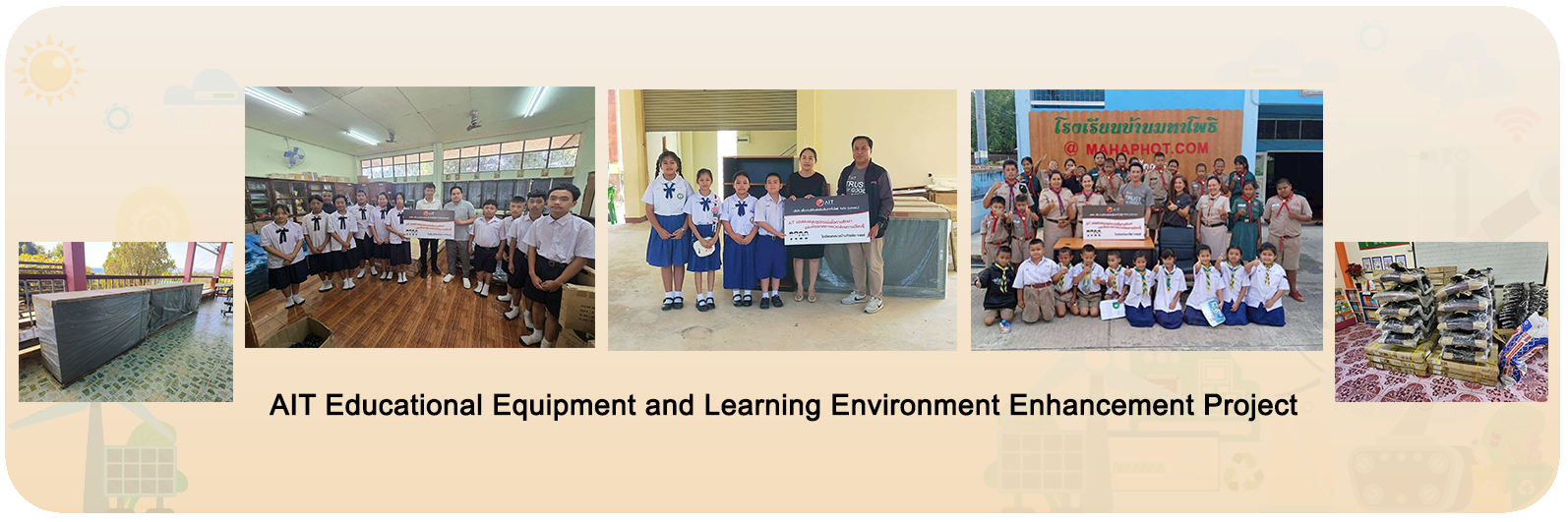
The Company also conducted follow-up monitoring of its educational support initiatives by collecting feedback and satisfaction assessments of the benefits of the schools. This evaluation was undertaken to assess the effectiveness of the initiatives and to use the findings as input for future improvements. The results indicated that the overall satisfaction level of the supported schools was rated as “Excellent”. The schools noted that the equipment and learning materials provided were practical and could be effectively utilized in teaching and learning activities, enhanced access to technology, and contributed to improved instructional effectiveness.
In addition, the Company participated in the “Computers for Thai Children: Financial Literacy Initiative” organized by the Stock Exchange of Thailand in collaboration with the Thai Capital Market Business Council and the Equitable Education Fund (EEF) under the “Opportunity Bank” program. The initiative aims to reduce educational inequality and promote sustainable financial literacy among Thai youth. In this regard, the Company donated 60 computers to enhance access to digital learning and support the development of essential skills for the future.
Futhermore, the Company provided computers for a computer laboratory to the Field Robotics Institute, King Mongkut’s University of Technology Thonburi (FIBO), on the occasion of the institute’s 30th anniversary exhibition. This support promotes learning and technological development for students and IT personnel, reflecting the Company’s commitment to strengthening technological resources for educational institutions and enabling learners to access effective tools for their future education and careers.
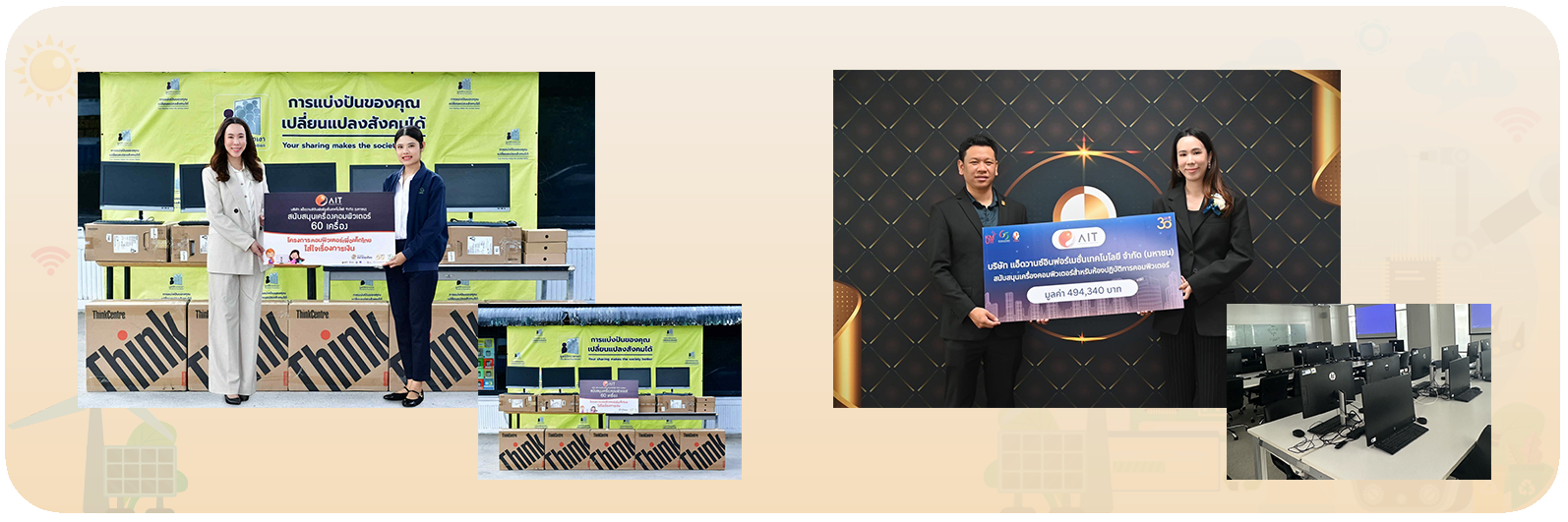
The Company recognizes that education is a fundamental pillar of sustainable social development and believes that access to appropriate technology empowers students to learn, develop skills, and fully realize their potential. Supporting access to technology is therefore an integral part of the Company’s social objectives, aimed at reducing the digital divide and expanding learning opportunities for Thai youth, enabling them to become a vital force in driving the nation toward a stable and sustainable digital future.
Other Social Management
Introduction
Under the “Guidelines for Social, Environmental, and Sustainability Activities,” the Company continued to implement social initiatives throughout the year, with a focus on employee engagement, the creation of shared value with communities, and appropriate responses to emerging social situations.
Plan & Outcomes — Description
The Company organized the “Pan Comp, Pan Khao, Pluk Jai” activity at Ban Nongkrabao School, Saraburi Province, in conjunction with the computer support previously mentioned, to encourage employee participation in volunteer activities and to strengthen the Company’s social responsibility. As part of the activity, the Company provided lunch for students to support proper nutrition and distributed vegetable seedlings for cultivation within the school. These efforts aimed to promote learning on sufficiency, self-reliance, and sustainable environmental stewardship.
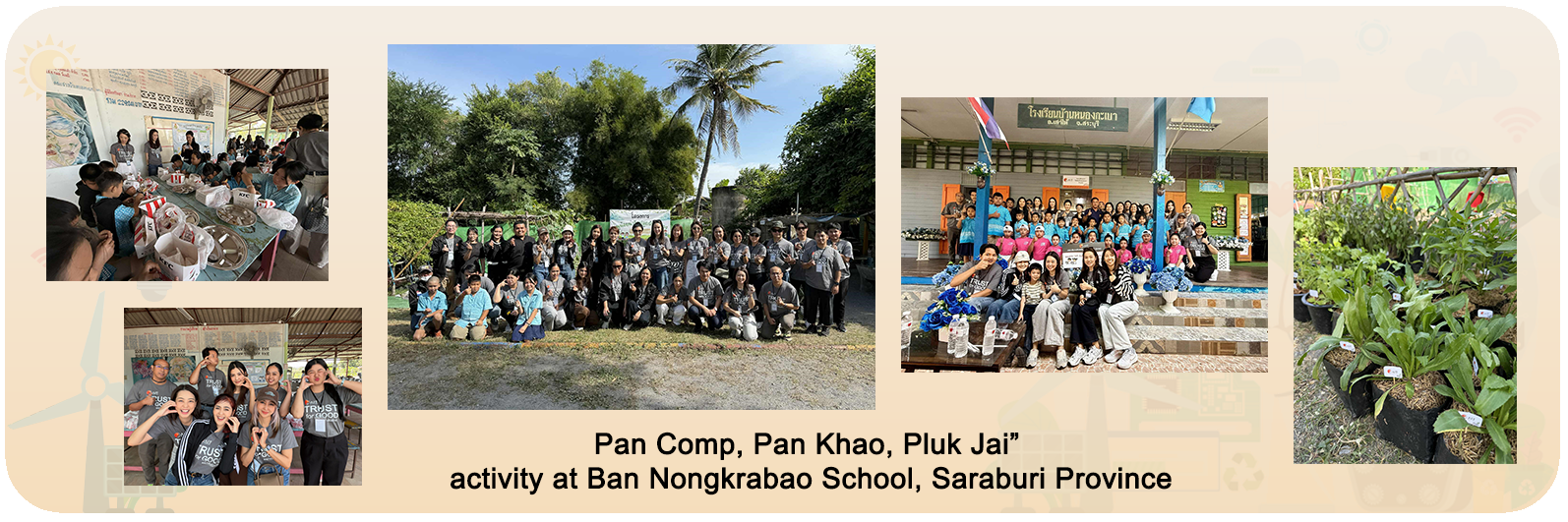
In addition, the Company provided social assistance in the form of monetary donations in response to various situations, particularly to support flood victims in southern Thailand through the Ongkorn Tumdee Foundation and the Hat Yai Hospital Foundation. The Company also facilitated the collection of essential items donated by employees for distribution to affected communities in Hat Yai District, Songkhla Province, contributing to the alleviation of hardship and supporting post-disaster recovery efforts.
At the same time, the Company expressed its concern and support for officials involved in addressing unrest along the Thai - Cambodian border through both monetary donations and the procurement of necessary equipment to assist in carrying out duties related to maintaining security and protecting national sovereignty.
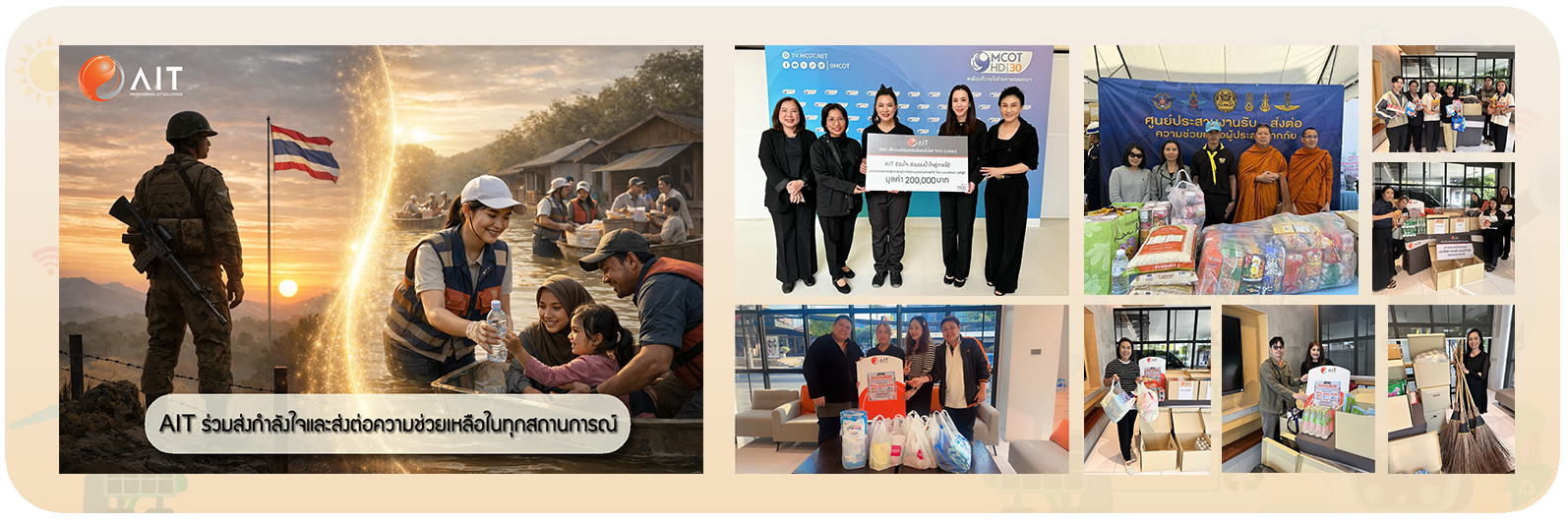
These initiatives reflect the Company’s commitment to being an active member of Thai society and to advancing socially responsible activities in alignment with its social framework and social sustainability objectives.
Law Violation Incidents
Law Violation Incidents
| Metric | Current Year | Previous Year | Two Years Ago |
|---|---|---|---|
| The total number of cases or incidents of significant violations of laws or regulations regarding social and human rights (Cases) | 0 | 0 | 0 |
| The total number of cases or incidents that cause significant labor disputes (Cases) | 0 | 0 | 0 |
| The total number of cases or complaints related to consumer rights violations (Cases) | 0 | ||
| The total number of cases or complaints related to partner rights violations (Cases) | 0 | ||
| The total number of cases or incidents that cause disputes with the community/society (Cases) | 0 | ||
| The total number of cases or incidents related to cyber security or customer data breaches (Cases) | 0 | ||
| The total number of cases or incidents related to safety and occupational health at work (Cases) | 0 |